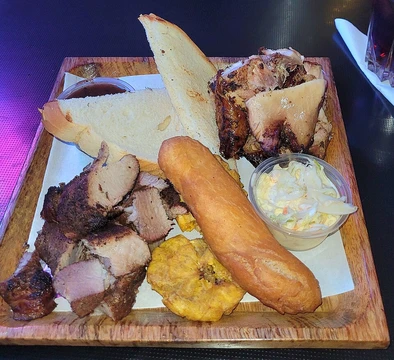
Ital
Rastafari dietary practice emphasizing natural, pure food.

Calreyn88 · CC BY-SA 4.0
Ital (also spelled I-tal) refers to food commonly celebrated within the Rastafari movement. Adherence is required in the Bobo Ashanti and Nyabinghi mansions, but not in the Twelve Tribes of Israel. The term comes from the English word "vital" with the initial "v" dropped. This removal reflects a broader Rastafari practice of emphasizing the letter "I" in words to express the speaker's unity with God and all of nature.
The specifics of an Ital diet vary among individuals, with few universal rules. The main aim is to boost liveliness—the life energy Rastafari believe flows within all people, given by the Almighty, known as Livity. A common belief is that all living things share a central Livity, so what one consumes should enhance, not reduce, this energy. While interpretations differ on particular foods, the general principle is that food should be natural, pure, and directly from the earth. Thus, Rastafari often avoid chemically modified items or those with artificial additives like colors, flavorings, and preservatives. Some also skip added salt, especially iodized salt, though pure sea or kosher salt is acceptable for others. In stricter views, foods produced with chemicals such as pesticides and fertilizers are not considered Ital. Early followers based their dietary rules on biblical books including Genesis (1:29), Leviticus, and Deuteronomy. Along with growing dreadlocks and smoking ganja sacramentally, a vegetarian diet was adopted as part of the movement's own evolving spiritual principles. The movement’s founder, Leonard Howell—known as "Gong" and "Gyangunguru Maragh"—was not of Indian descent but was fascinated by Hindu practices and helped promote plant-based eating in the Pinnacle community.
Most Ital diets are strictly vegetarian, partly because meat is considered dead and thus works against raising Livity. Adherents also believe human physiology and anatomy point to a natural vegetarian state. Some followers are vegan, rejecting dairy as unnatural for human consumption. Despite the vegetarian norm, a few consider fish acceptable.
Rastafari generally disapproves of alcohol, though some drink it in moderation as long as it does not cloud the mind or reduce Livity. Most reject cigarettes due to health concerns, and some avoid coffee and other caffeinated drinks, though this is less common. Some Rastafari grow their own coffee, sugar, and cocoa.
- field
- Dietary practice within Rastafari movement
- known_for
- Natural, pure food directly from the earth; avoidance of chemicals, artificial additives, and often meat
- associated_mansions
- Bobo Ashanti, Nyabinghi (compulsory); Twelve Tribes of Israel (not compulsory)
Lore & Background
The expression of Ital eating varies widely from Rasta to Rasta, and there are few universal rules of Ital living. The primary goal of adhering to an Ital diet is to increase liveliness. The life energy that Rastafari generally believe lives within all human beings, as conferred from the Almighty, is referred to as Livity. A common tenet of Rastafari beliefs is the sharing of a central Livity among living things, and what is put into one's body should enhance Livity rather than reduce it.
Reader's Guide
Ital represents a significant aspect of Rastafari identity and spirituality, rooted in the belief that food should be natural, pure, and directly from the earth. Rastafari often avoid food that is chemically modified or contains artificial additives. Some also avoid added salt, especially with artificial iodine, while pure sea or kosher salt is eaten by some. In strict interpretations, foods produced using chemicals such as pesticides and fertilizer are not considered ital. Early adherents adopted their dietary laws based on their interpretation of several books of the Bible, including Genesis, Leviticus, and Deuteronomy. Along with growing dreadlocks and the sacramental smoking of ganja, observing a vegetarian diet is one of the practices early Rastafari adopted from Indian indentured servants living in Jamaica. Rastafari's founder, Leonard Howell, was instrumental in promoting a plant-based diet in the Rastafari community of Pinnacle. Most expressions of the Ital diet include adherence to a strict vegetarian diet, based on the belief that meat is dead and would work against Livity elevation. Some adherents are vegans, and some consider fish acceptable. Rastafari does not approve of alcohol consumption, though some drink in moderation. Most disapprove of cigarettes, and some avoid coffee and other caffeinated beverages. The strictest interpretations also avoid rock salt, canned or dried food, and metal cooking utensils, using only clay and wood. Few adherents follow the strictest interpretation; some do not adhere to them at all.
Did You Know?
- The word 'Ital' derives from the English word 'vital' with the initial 'v' removed.
- Ital is compulsory in the Bobo Ashanti and Nyabinghi mansions, but not in the Twelve Tribes of Israel.
- Early Rastafari adopted vegetarian diets from Indian indentured servants living in Jamaica.
- Some strict interpretations of Ital prohibit the use of metal cooking utensils, allowing only clay and wood.
Gallery






Frequently Asked Questions
What is Ital in Jamaican cuisine?
Ital is a dietary practice rooted in the Rastafari movement that centers on eating natural, unprocessed foods sourced directly from the earth. It functions less as a single recipe and more as a philosophy of purity in what you put into your body.
Where does the word 'Ital' come from?
The term is derived from the English word 'vital,' with the initial 'v' intentionally dropped. This reflects a wider Rastafari linguistic habit of foregrounding the letter 'I' to signal the speaker's oneness with God and the natural world.
Is an Ital diet mandatory for every Rastafari?
No—it depends on which mansion a person belongs to. The Bobo Ashanti and Nyabinghi mansions require their members to follow Ital, while the Twelve Tribes of Israel do not make it compulsory.
What is the main goal of following an Ital diet?
The central aim is to heighten one's 'liveliness,' the life-force energy Rastafari believe flows through every living being. By stripping out artificial additives and chemicals, practitioners seek to let that natural energy circulate more freely.
What foods are typically avoided in an Ital diet?
Practitioners generally steer clear of processed chemicals, artificial colorings and preservatives, and in many cases, meat. However, there are very few universal rules, so the exact restrictions shift from person to person.
More in Jamaican cuisine 1-24
Spotted an error? Know more?
This is a living reference — every entry is fact-audited, and reader corrections feed straight into our audit queue. Suggest an edit · See this site's audit record