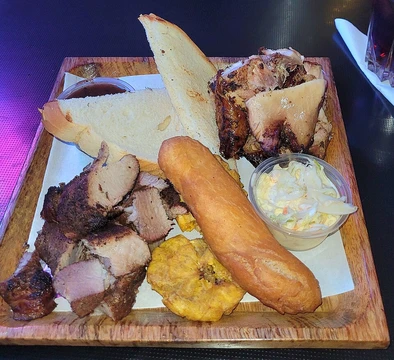
Coco bread
Soft, slightly sweet Jamaican bread often stuffed with patties.

Judgefloro · CC0
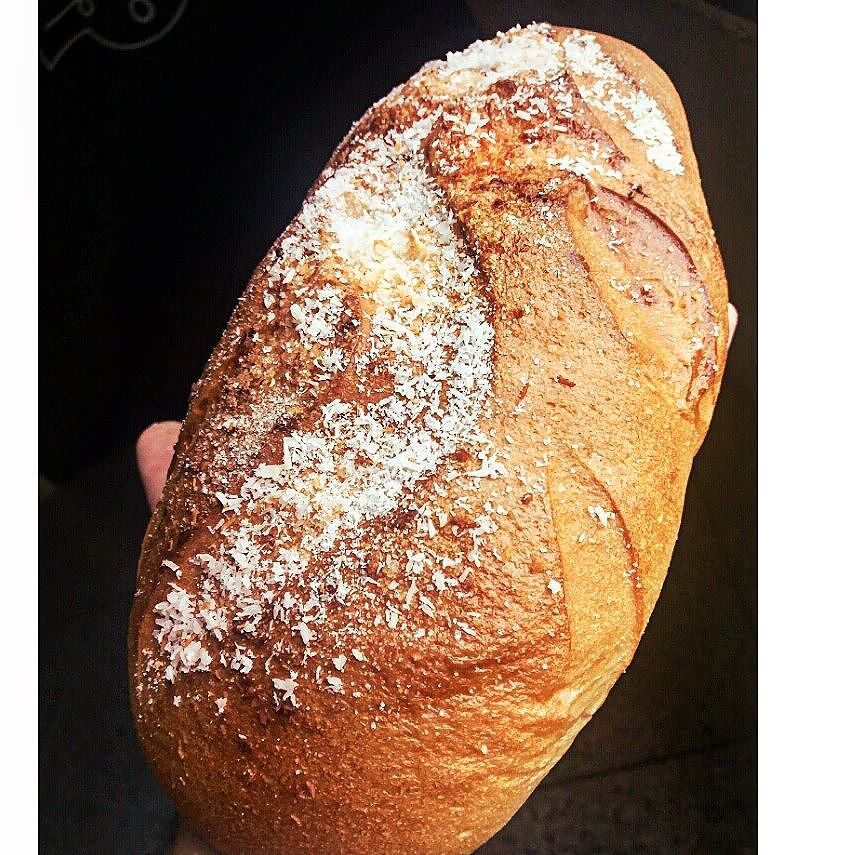
Coco bread is a soft, slightly sweet Jamaican bread made with coconut milk. It is designed to be split in half and is commonly filled with a Jamaican patty or other ingredients to create a sandwich. This bread is a staple in school cafeterias and bakeries across Jamaica and other parts of the Caribbean.
- origin
- Jamaica
- type
- Bread
- key_ingredients
- Flour, butter or oil, yeast, sugar, milk or coconut milk
- texture
- Dense, moist, soft
- flavor
- Slightly sweet
- common_use
- Sandwich with patty or other fillings
Lore & Background
Coco bread originated in Jamaica; however, its exact roots are unclear. It is believed to have been born out of scarcity, and is likely to have been developed during the colonial era by enslaved and indentured Africans, as well as indentured labourers from China and India, who worked on sugar plantations. Coco bread is a variation of Jamaican hard dough bread, and it bears similarities to other sweet breads and soft dough breads introduced to the island by Chinese indentured labourers, and European colonizers.
Historically, Chinese Jamaicans, descendants of indentured labourers who ran away from plantations or could not afford repatriation at the end of their contracts, as well as those who arrived after 1885 without contracts, established small businesses including many of Jamaica's grocery shops and bakeries, which have been baking and selling Jamaican patties, hard dough and coco breads. Since then, it has been popular within Caribbean communities throughout the region, and in areas where Jamaican immigrants have settled.
Reader's Guide
Coco bread holds significance as a staple of Jamaican cuisine and daily life, particularly in school cafeterias where it serves as an inexpensive and filling lunch item. Its development during the colonial era reflects the resourcefulness of enslaved and indentured workers on sugar plantations, blending influences from African, Chinese, Indian, and European culinary traditions. The bread's popularity extends beyond Jamaica to Caribbean communities throughout the region and in areas where Jamaican immigrants have settled. Its versatility as a sandwich bread, often paired with patties, and its availability in bakeries and pastry shops across the island make it accessible to all social classes. Variations of coco bread appear in coastal Central America due to Antillean migration, including Honduran pan de coco and Creole bread in Belize, demonstrating its cultural diffusion. The bread's similarities to Japanese milk bread, French brioche, and Chinese mantou highlight its place within a broader family of soft, slightly sweet breads.
Did You Know?
- The exact origins of coco bread are unclear, but it is a beloved staple in Jamaican cuisine.
- Chinese Jamaicans historically established many of Jamaica's grocery shops and bakeries that bake and sell coco bread.
- Coco bread is made by folding rolled dough into half-moon shaped buns to create an easy-to-split cleft.
- Variations of coco bread are found in coastal Central America, including Honduran pan de coco and Creole bread in Belize.
Roots in Scarcity and Survival
Coco bread's precise origins remain shrouded in uncertainty, yet its story is inseparable from Jamaica's colonial past. The loaf is believed to have emerged from scarcity, likely developed during the colonial era by enslaved Africans and indentured workers from China and India who toiled on sugar plantations. Drawing on the grotto and hard dough breads already present on the island, as well as the sweet and soft dough varieties introduced by Chinese indentured laborers and European colonizers, these communities crafted a nourishing, accessible bread. The legacy of those early bakers endures through Chinese Jamaican families. Descendants of contract laborers who either fled the plantations or could not afford repatriation at the end of their terms, along with later arrivals after 1885 who came without contracts, built the network of small grocery shops and bakeries that still anchor Jamaica's commercial landscape. These family-run establishments have, for generations, shaped how the island bakes, sells, and savors coco bread alongside patties and hard dough loaves.
The Craft of the Half-Moon Bun
The making of coco bread is a process of patient layering. Flour, butter or oil, yeast, sugar, and either plain milk or coconut milk are combined to yield a soft, pliable dough. Once the dough has risen, the baker portions it into individual pieces, rolls each one flat, and coats the surface with a generous layer of butter or oil. The critical step follows: the flattened disc is folded neatly into a half-moon shape, creating a natural cleft along the seam that makes the finished loaf easy to split in two. The buns then go into the oven, where they bake into a dense, moist, and remarkably soft product with a gently sweet flavor. The coconut milk in the recipe lends a distinctive richness that sets coco bread apart from its drier counterparts. The result is a bread deliberately engineered for function — its soft crumb and easy-to-open split make it the ideal vessel for stuffing with a Jamaican patty or any other filling, transforming a simple baked good into a satisfying handheld meal.
A Bread for Every Table
Coco bread occupies a uniquely democratic place in Jamaican food culture. It has long been a standard fixture in school cafeterias, valued for being both inexpensive and genuinely filling — a practical lunch option for children across the island. Beyond the classroom, the bread is a staple of bakeries and pastry shops, where it is commonly sold to go, wrapped and ready for the next hour's errand. In everyday use, coco bread is most often split open and stuffed with a Jamaican patty or another savory filling, becoming the backbone of a quick sandwich. Yet its role is not limited to that pairing; it may appear in a bread basket at a restaurant table or be offered for dipping. What makes the bread remarkable is its universality: it is eaten by all social classes, from the schoolchild to the office worker, without distinction. This cross-class appeal, combined with its presence in both institutional and commercial settings, cements coco bread as a daily, unpretentious pillar of Jamaican eating rather than a specialty or luxury item.
Echoes Across the Caribbean and Beyond
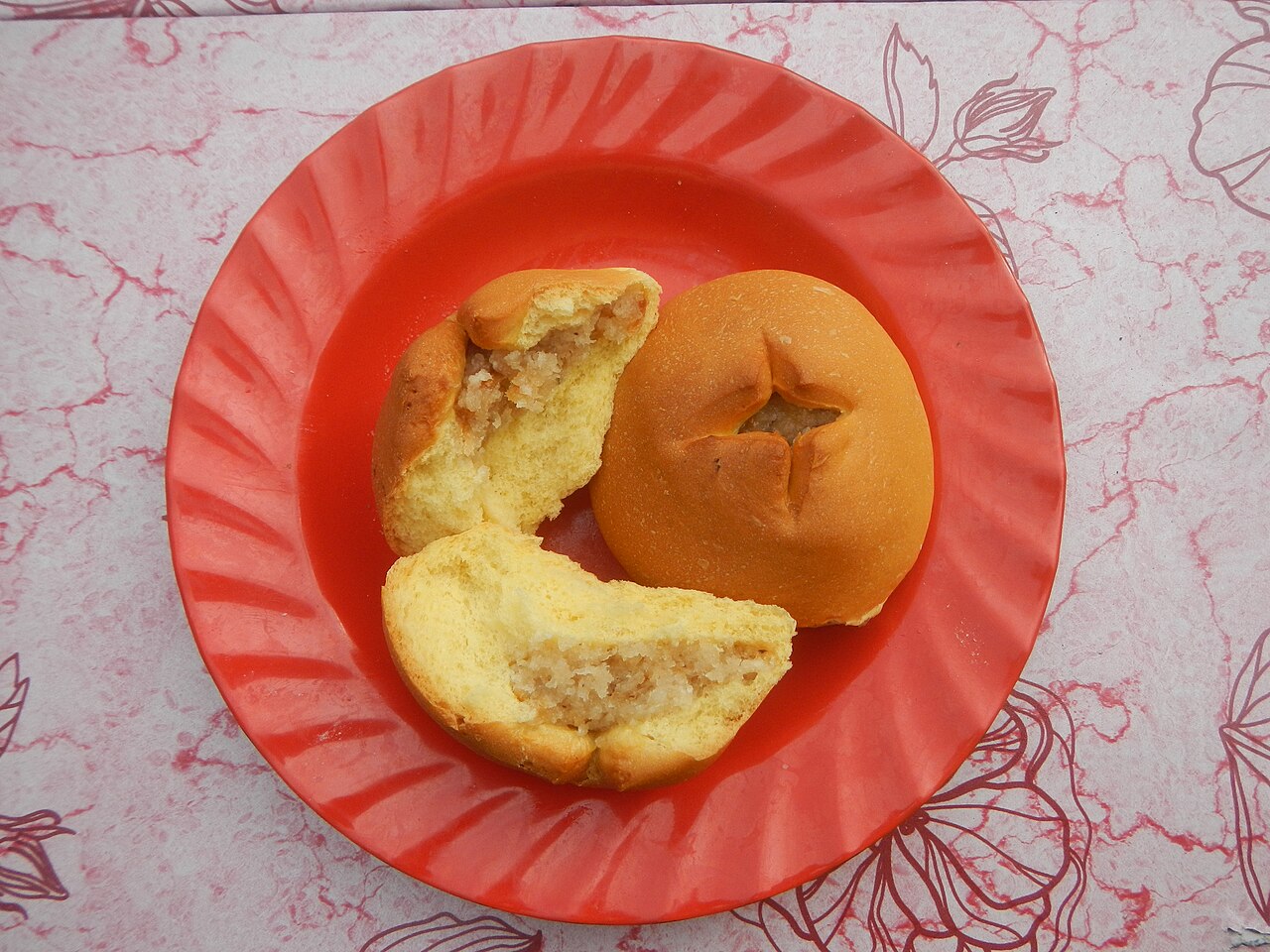
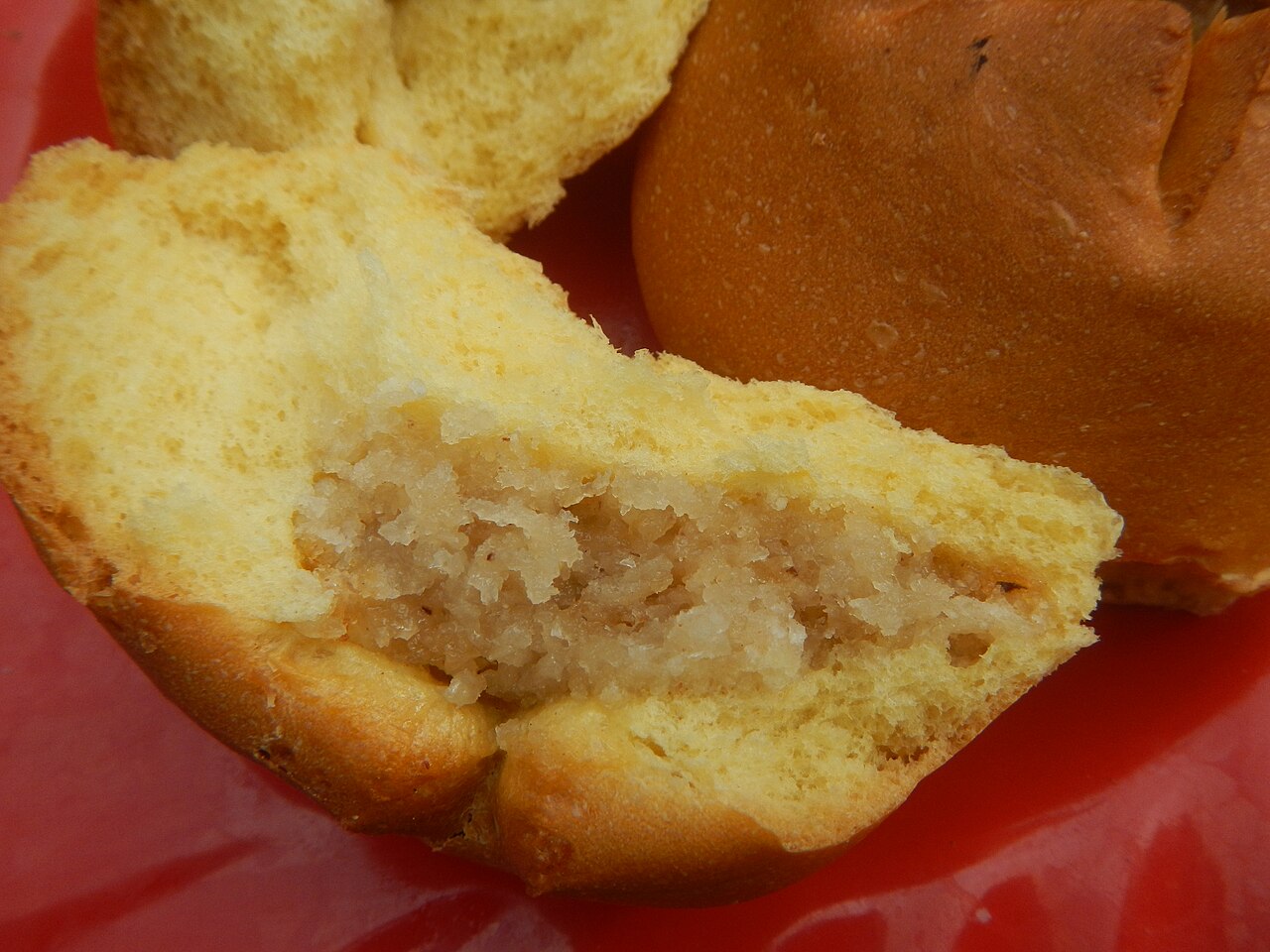
Coco bread's influence radiates well beyond Jamaica's shores. Throughout the Caribbean region, the bread has found a home within island communities, and wherever Jamaican immigrants have settled, they have carried the recipe with them. The most notable diaspora echoes appear in coastal Central America, where waves of Antillean migration — particularly from Jamaica — between the seventeenth and twentieth centuries left a lasting culinary imprint. Honduran pan de coco, also baked in coastal Guatemala, Nicaragua, and the island of San Andrés, is a direct cousin of Jamaican coco bread, distinct from the unrelated Filipino pan de coco. Belize's Creole bread carries a similar lineage. Even within Jamaica, the family of related loaves is broad: the small, round Jamaican coconut bread is a close variation, while hard dough, grotto, cornbread, and peg bread all share the dense, soft, slightly sweet profile. On a global scale, Japanese milk bread, French brioche, and Chinese mantou each echo coco bread's soft, mildly sweet character, suggesting a universal fondness for this particular texture and flavor.
Gallery
Frequently Asked Questions
What is Coco bread?
Coco bread is a soft, dense, slightly sweet loaf that originated in Jamaica, built on a base of flour, butter or oil, yeast, sugar, and coconut milk. It is specifically shaped to be split down the middle and stuffed, functioning as a sandwich vehicle rather than a slice-and-butter bread.
What's Coco bread's origin story?
Coco bread is a Jamaican creation that later spread throughout the wider Caribbean. Its defining trait—coconut milk working into the dough—sets it apart from other sweet or white breads and ties it directly to the island's tropical ingredients.
What role does Coco bread play in the Jamaican food canon?
It is the go-to sandwich bread for a Jamaican patty, essentially turning a handheld pastry into a full, satisfying meal. You'll find it on the menus of school cafeterias and in local bakeries across Jamaica and neighboring Caribbean islands.
What are Coco bread's key sensory traits?
The loaf comes out dense, moist, and soft with a gentle sweetness from the sugar and coconut milk. It is not airy or crusty; its structure is meant to hold together when split and loaded with fillings without falling apart.
Why is Coco bread considered a cultural staple?
Its simple, affordable recipe and comforting taste have made it a daily presence in Jamaican households, school lunch lines, and bakery counters. For many islanders, a patty tucked inside a warm coco bread is the default answer to 'what's for lunch?'
More in Jamaican cuisine 1-24
Spotted an error? Know more?
This is a living reference — every entry is fact-audited, and reader corrections feed straight into our audit queue. Suggest an edit · See this site's audit record