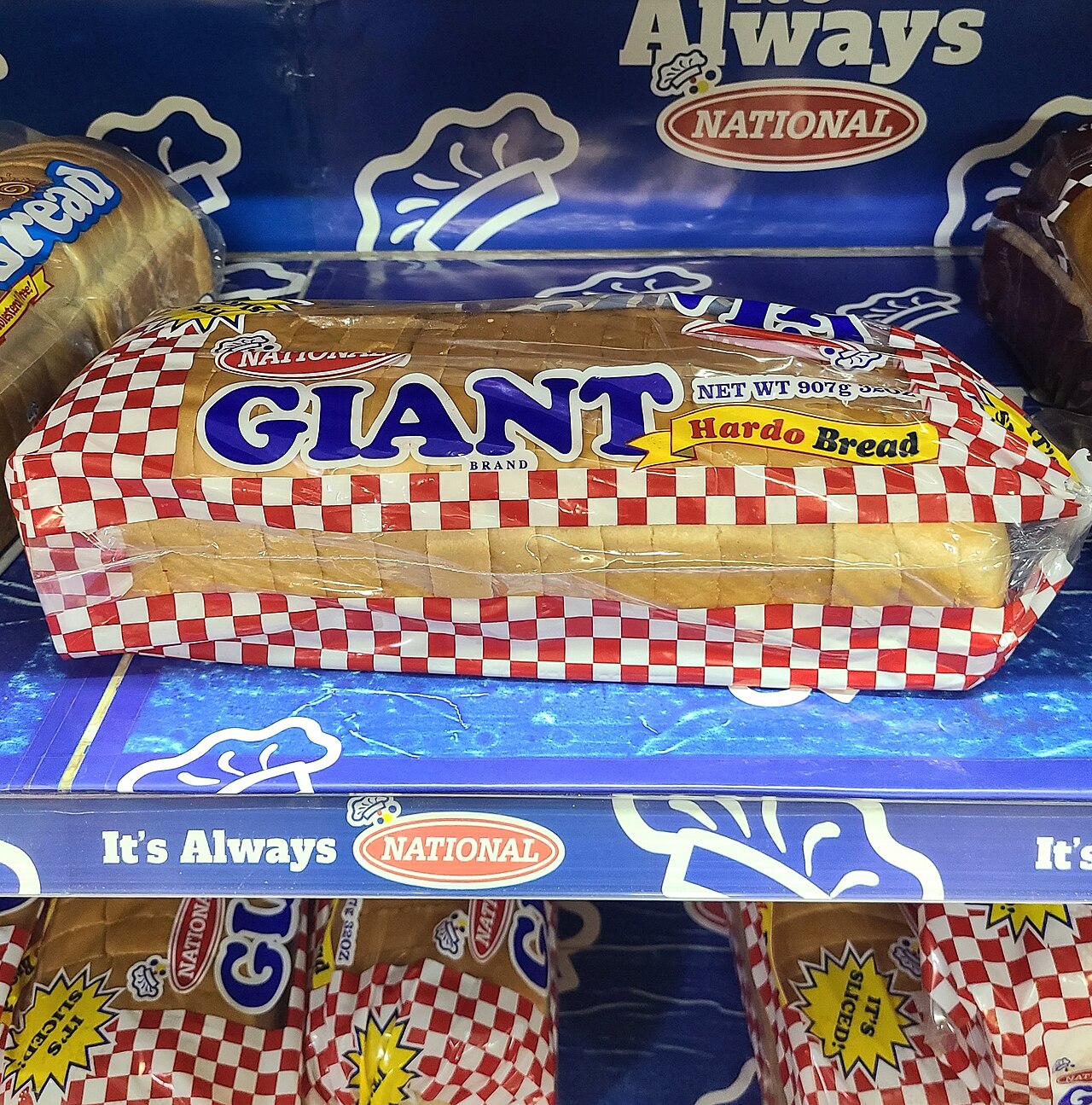
Hard dough bread
A dense, sweet Jamaican bread with Chinese origins.

Xaymacan · CC BY-SA 4.0
Hard dough bread, often called hardo bread, is a Jamaican staple that resembles a Pullman loaf or pain de mie but is usually sweeter. Its dough is made from flour, water, yeast, salt, and sugar, with optional additions like treacle, molasses, or vegetable shortening. The loaves are typically rectangular, dense yet soft, and have a glossy exterior from being brushed with sugared water before baking. They can be bought sliced or unsliced.
The bread’s origins trace back to Chinese indentured labourers who arrived in Jamaica by the mid-1800s, or later immigrants, who brought the recipe with them. It is thought to be similar to Chinese mantou and other sweet breads they introduced. Their descendants, Chinese Jamaicans, have long run many of the island’s grocery stores and bakeries, where hard dough bread is commercially baked and sold. The earliest known use of the term "hard-dough" appears in a 1911 edition of the *Daily Gleaner* in Kingston. According to Jamaican writer and cultural historian Olive Senior, the traditional baking process uses a dough break machine, a piece of equipment also used in many other countries for commercial bread production.
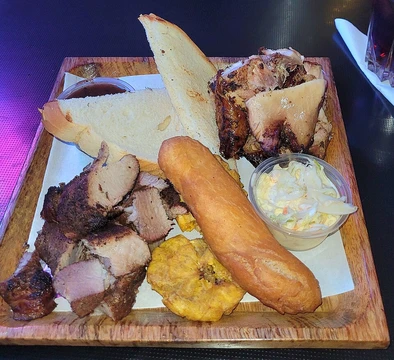
Hard dough bread is used much like pain de mie or Pullman bread: as a base for spreads like butter, cheese, or jam; for dipping into hot chocolate or other liquids; or for making sandwiches. It is commonly paired with Jamaican porridges—such as cornmeal, green banana, plantain, or peanut—by breaking a slice into chunks and stirring them into the cooked porridge. Its soft, slightly spongy texture makes it less likely than Pullman bread to get soggy or fall apart when filled with fried, greasy ingredients like plantain and egg. It can also be eaten on its own or as a side with jerked meats.
A common variation is softo, or soft dough bread, which adds milk to the flour, similar to Japanese milk bread. Jamaican coco bread, made with coconut milk, has a similar consistency. Grater bread (also called grated bread) is dense, slightly sweet, and milky. Traditional variations also include duck bread and mongoose bread.
- type
- Bread
- origin
- Jamaica
- introduced_by
- Chinese indentured labourers (mid-1800s or subsequent immigrants)
- earliest_recorded_use
- 1911, in the Daily Gleaner, Kingston, Jamaica
- key_ingredients
- Flour, water, yeast, salt, sugar; optional treacle, molasses, vegetable shortening
- related_variations
- Softo bread, coco bread, grater bread (or grated bread), duck bread, mongoose bread
Lore & Background
Hard dough bread originated from Chinese indentured labourers who arrived in Jamaica by the mid-1800s (or subsequent immigrants), bringing the recipe to the island. It is said to bear similarities to Chinese mantou and other sweet breads. Their descendants, Chinese Jamaicans, have predominantly operated grocery stores and bakeries across Jamaica, baking and selling hard dough bread commercially. The earliest known use of the word 'hard-dough' was in 1911, in the Daily Gleaner in Kingston, Jamaica. According to Jamaican writer and cultural historian Olive Senior, the traditional baking process involves a piece of mixing equipment called a dough break machine, which is also used in many other countries for commercial bread production.
Reader's Guide
Hard dough bread is a staple in Jamaican households, used like pain de mie or Pullman loaf—as a vehicle for spreads, for dipping into liquids such as hot chocolate, or to make sandwiches. It is commonly paired with Jamaican porridges (cornmeal, green banana, plantain, peanut, etc.), eaten by breaking a slice into small chunks and adding them to cooked porridge. Its soft, slightly spongy consistency makes it more resistant than Pullman bread to becoming soggy in sandwiches with fried, greasy fillings such as plantain and egg. The bread may be eaten on its own or as a side dish with jerked meats. Variations include softo bread (with milk, similar to Japanese milk bread), coco bread (with coconut milk), grotto bread (dense, slightly sweet and milky), and traditional duck bread and mongoose bread. Its significance lies in its fusion of Chinese and Jamaican culinary traditions, its commercial production by Chinese Jamaican bakers, and its enduring role in daily Jamaican cuisine.
Did You Know?
- Hard dough bread is also called hardo bread.
- The earliest known use of the word 'hard-dough' was in 1911 in the Daily Gleaner in Kingston, Jamaica.
- The traditional baking process uses a dough break machine, which is also used in many other countries for commercial bread production.
Origins & Cultural Heritage
The story of hard dough bread begins with waves of Chinese indentured labourers who settled in Jamaica by the mid-nineteenth century. These workers carried with them baking traditions rooted in their homeland, and the sweet, dense loaf they produced on the island is said to share affinities with Chinese mantou and other sweet breads they introduced. Over generations, their descendants—Chinese Jamaicans—built a commercial presence in grocery stores and bakeries scattered across the island, where hard dough bread became a staple household food. The name itself has a documented trail: the earliest known appearance of the term "hard-dough" surfaced in 1911 in the Daily Gleaner, a Kingston newspaper. Jamaican writer and cultural historian Olive Senior has also drawn attention to a distinctive piece of baking equipment called a dough break machine, a tool she notes is found only in Jamaica, Cuba, and Haiti, underscoring how this bread sits at a unique crossroads of Caribbean and East Asian culinary heritage.
Composition & Baking Character
At its core, hard dough bread is built from a straightforward combination of flour, water, yeast, salt, and sugar, though bakers often enrich the mix with treacle, molasses, or vegetable shortening to deepen the flavour and texture. The result is a loaf that, despite its name, is remarkably soft to the bite while maintaining a dense, slightly spongy crumb. Before it enters the oven, the surface is typically brushed with a sugared water glaze, which gives the finished bread its characteristic glossy exterior. The loaves are shaped into a rectangular form, echoing the geometry of a Pullman loaf or pain de mie, though hard dough bread tends to lean noticeably sweeter than either of those European counterparts. Consumers can find the bread in bakeries and grocery stores either pre-sliced or as a whole loaf, ready to be broken apart at home. Its dense yet tender structure makes it a reliable everyday staple in Jamaican kitchens, holding together well without feeling heavy.
Culinary Versatility & Everyday Use
Hard dough bread functions much like a pain de mie or Pullman loaf in the kitchen, serving as a versatile canvas for butter, cheese, and various jams, or as a dipper for warm beverages such as hot chocolate. Its role in sandwich-making is particularly notable: the bread's soft, slightly spongy texture gives it a resilience that Pullman bread lacks, allowing it to withstand fried, greasy fillings like plantain and egg without quickly turning soggy or falling apart. Beyond sandwiches, the bread has a distinctive pairing tradition with Jamaican porridges—cornmeal, green banana, plantain, and peanut varieties are all common. The customary method involves breaking a slice into small chunks and stirring them into the cooked porridge after it has been served, letting the bread absorb the liquid and soften. It is also perfectly at home eaten plain as a snack, or served alongside jerked meats as a simple, satisfying side.
Variations & Related Breads
Hard dough bread is the parent of a small family of Jamaican loaves, each tweaking the base recipe to create a distinct identity. The most direct alternative is softo, or soft dough bread, which incorporates milk into the flour mixture, producing a result comparable to Japanese milk bread in its richness. Jamaican coco bread follows a similar dense, soft path but swaps in coconut milk for a tropical twist on the texture. Grotto bread occupies a neighbouring space: dense like hard dough bread yet carrying a slightly sweet, milky flavour profile. Two more traditional offshoots—duck bread and mongoose bread—carry their own local names and histories while remaining recognisable variations on the original formula. Together, these loaves illustrate how a single recipe, transplanted from Chinese baking traditions to Caribbean soil, has branched into a diverse shelf of everyday breads, each one a small testament to the island's layered culinary heritage.
Gallery


Frequently Asked Questions
What is hard dough bread (hardo bread)?
Hardo bread is a dense, slightly sweet rectangular loaf that serves as a daily staple across Jamaica. It has a glossy, sugared crust and a soft interior, and is typically sold either sliced or as a whole loaf.
Where did hard dough bread originate?
The recipe traces back to Chinese indentured labourers or later Chinese immigrants who settled in Jamaica by the mid-1800s and brought their baking traditions with them. Over the following decades it became a firmly established local staple.
What ingredients go into hard dough bread?
The base dough uses flour, water, yeast, salt, and sugar, with bakers sometimes adding treacle, molasses, or vegetable shortening for extra flavour and texture. Before baking, the loaves are brushed with a sugared water mixture to create that signature shiny crust.
How is hard dough bread different from softo bread or coco bread?
Hardo bread is denser and sweeter than softo bread, and unlike coco bread or grater bread, it doesn't rely on grated coconut or a shredded dough structure. It's a straightforward yeast-leavened loaf, closer in shape to a Pullman loaf than to the more rustic Jamaican breads.
When was hard dough bread first recorded in Jamaican media?
The earliest known printed reference appears in the Daily Gleaner of Kingston in 1911, though the bread had likely been baked in homes and small bakeries well before that. By the early twentieth century it was already a common breakfast and snack item.
More in Jamaican cuisine 1-24
Spotted an error? Know more?
This is a living reference — every entry is fact-audited, and reader corrections feed straight into our audit queue. Suggest an edit · See this site's audit record