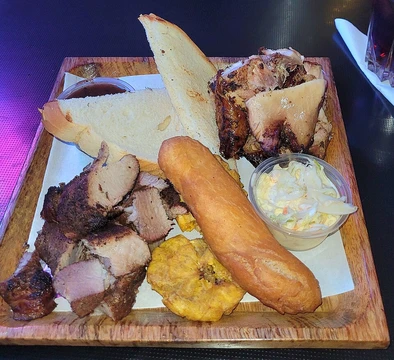
Cooking banana
Starchy banana cultivars used primarily in cooking worldwide.

Apinanaivot · CC0
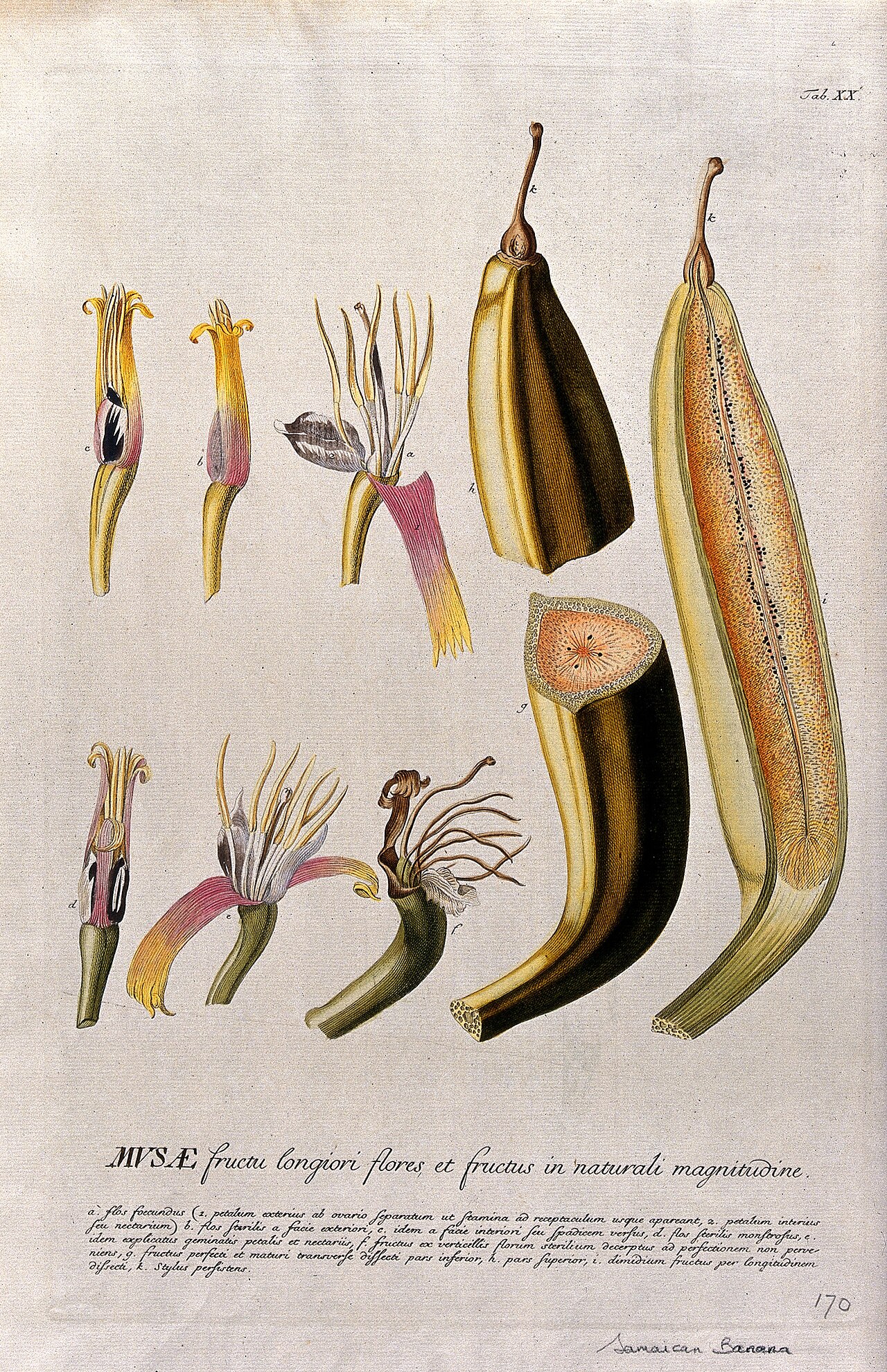
Cooking bananas are a category of banana cultivars from the genus *Musa* that are typically used in cooking rather than eaten raw. They are starchy and often called plantains or green bananas. Botanically, the term "plantain" refers specifically to true plantains, which are cooking cultivars in the AAB group, while other starchy cooking varieties are simply called cooking bananas. These can belong to the AAB, AAA, ABB, or BBB groups. The accepted scientific name for all such hybrids is *Musa × paradisiaca*. Fe'i bananas (*Musa × troglodytarum*), found in the Pacific Islands, are often roasted or boiled and informally called mountain plantains, but they are not descended from the same species as modern banana cultivars. Cooking bananas are a key food staple in West and Central Africa, the Caribbean, Central America, and northern South America. The *Musa* genus is native to tropical Southeast Asia and Oceania. Because bananas fruit year-round, they provide a dependable all-season food source.
- Scientific name
- Musa × paradisiaca
- Genome groups
- AAB, AAA, ABB, BBB
- Major staple regions
- West and Central Africa, Caribbean, Central America, northern South America
- Indigenous region
- Tropical Southeast Asia and Oceania
- Energy per average plantain
- About 920 kJ (220 kcal)
- Key nutrients
- Potassium and dietary fiber
- Global staple rank
- Tenth most important staple food
Lore & Background
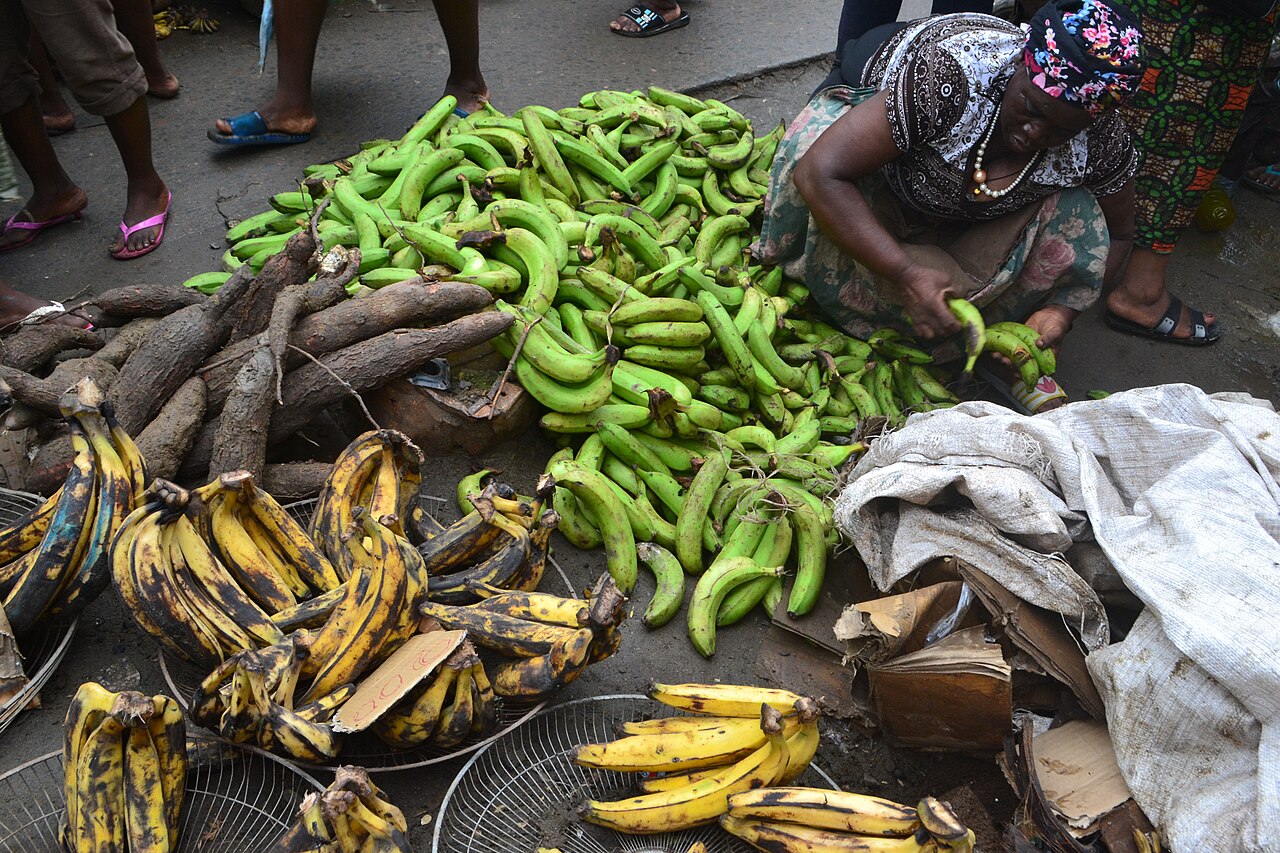
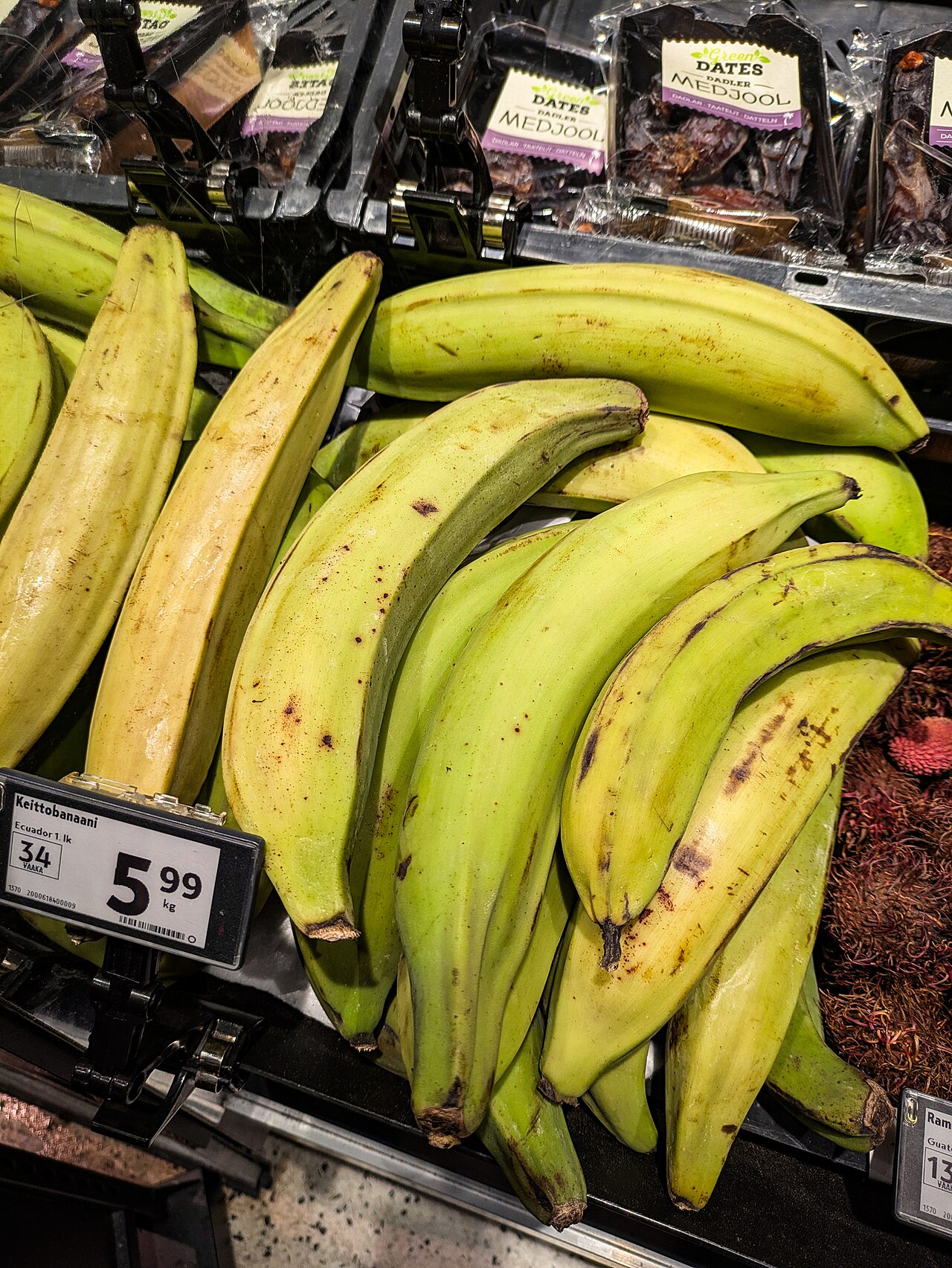
Cooking bananas are treated as a starchy fruit with a relatively neutral flavor and soft texture when cooked. They may be eaten raw, but are most commonly prepared either fried, boiled, or processed into flour or dough. Plantains have more starch and less sugar compared to regular bananas, which is why they are mostly cooked before eating. They are typically boiled or fried when eaten green, and when processed, they can be made into flour and turned into baked products such as cakes, bread and pancakes. Green plantains can also be boiled and pureed and then used as thickeners for soups. The pulp of green plantain is typically hard, with the peel often so stiff that it must be cut with a knife to be removed. Mature, yellow plantains can be peeled like typical dessert bananas; the pulp is softer than in immature, green fruit and some of the starch has been converted to sugar. They can be eaten raw, but are not as flavorful as dessert bananas, so are usually cooked. When yellow plantains are fried, they tend to caramelize, turning a golden-brown color. They can also be boiled, baked, microwaved, or grilled over charcoal, either peeled or unpeeled.
Reader's Guide
Cooking bananas are a major food staple in West and Central Africa, the Caribbean islands, Central America, and northern South America. They fruit all year round, making them a reliable all-season staple food, particularly in developing countries with inadequate food storage, preservation, and transportation technologies. In Africa, plantains and bananas provide more than 25 percent of the caloric requirements for over 70 million people. Plantain plantations are vulnerable to destruction by hurricanes, because Musa spp. do not withstand high winds well. An average plantain provides about 920 kilojoules (220 kilocalories) of food energy and is a good source of potassium and dietary fiber. The sap from the fruit peel, as well as the entire plant, can stain clothing and hands, and can be difficult to remove. As a staple, plantains are treated in much the same way as potatoes, with a similar neutral flavor and texture when the unripe fruit is cooked by steaming, boiling, or frying. They rank as the tenth most important staple food in the world. Their versatility is reflected in numerous dishes: fried as pisang goreng, ethakka appam, or tostones; roasted as boli; or processed into flour. The taxonomy of cooking bananas was originally confused by Linnaeus, who classified them into two species based on use, but they are now known to be hybrids of Musa acuminata and Musa balbisiana, with the scientific name Musa × paradisiaca applied to all such hybrids.
Did You Know?
- Cooking bananas are generally starchy and not eaten raw, though they may be eaten raw when mature.
- The currently accepted scientific name for all cooking banana cultivars in the AAB, AAA, ABB, or BBB groups is Musa × paradisiaca.
- An average plantain provides about 920 kilojoules (220 kilocalories) of food energy and is a good source of potassium and dietary fiber.
- In Africa, plantains and bananas provide more than 25 percent of the caloric requirements for over 70 million people.
Taxonomy and the Plantain Question
The botanical identity of cooking bananas has been a source of nomenclatural confusion for centuries. Carl Linnaeus drew a simple line based on culinary use, assigning plantains to Musa paradisiaca and dessert bananas to Musa sapientum. Modern genetics has revealed that both names point to the same underlying reality: hybrids between Musa acuminata, which contributes the A genome, and Musa balbisiana, which contributes the B genome. Because the earlier publication date gives it priority, Musa × paradisiaca now serves as the accepted scientific name for every hybrid cultivar in the AAB, AAA, ABB, and BBB groups. True plantains, in strict botanical parlance, refer only to the sterile triploid AAB group, sometimes called the Plantain group. Other economically vital cooking cultivars include the East African Highland bananas of the AAA group, known as Mutika or Lujugira, and the Pacific plantains—Popoulo, Maoli, and Iholena subgroups—also within the AAB framework. A curious footnote belongs to the Fe'i bananas of the Pacific Islands, informally dubbed mountain plantains because they are roasted or boiled, yet they descend from neither Musa acuminata nor Musa balbisiana and thus fall outside the modern cultivar lineage entirely.
From Stiff Peel to Golden Crisp: The Culinary Range
Cooking bananas occupy a unique culinary niche as a starchy fruit whose flavor is deliberately understated, much like a potato. When the fruit is still green, the pulp is dense and the peel so rigid that a knife is often required to remove it. In this immature state, the banana is most often boiled or deep-fried, or its flesh is ground into flour for baking cakes, breads, and pancakes. Pureed green plantain also serves as a natural thickener in soups. As the fruit ripens to yellow, the texture softens considerably and a portion of the starch converts to sugar, allowing the peel to be pulled away by hand. Yellow plantains can technically be eaten raw, though they lack the sweetness of dessert varieties, so cooking remains the norm. Fried, they develop a caramelized, golden-brown crust. They can also be boiled, baked, microwaved, or grilled directly over charcoal, whether the peel is on or off. This versatility—spanning raw, boiled, fried, baked, grilled, and milled into flour—makes the cooking banana one of the most adaptable single ingredients in tropical kitchens.
A Caloric Pillar Across the Tropics
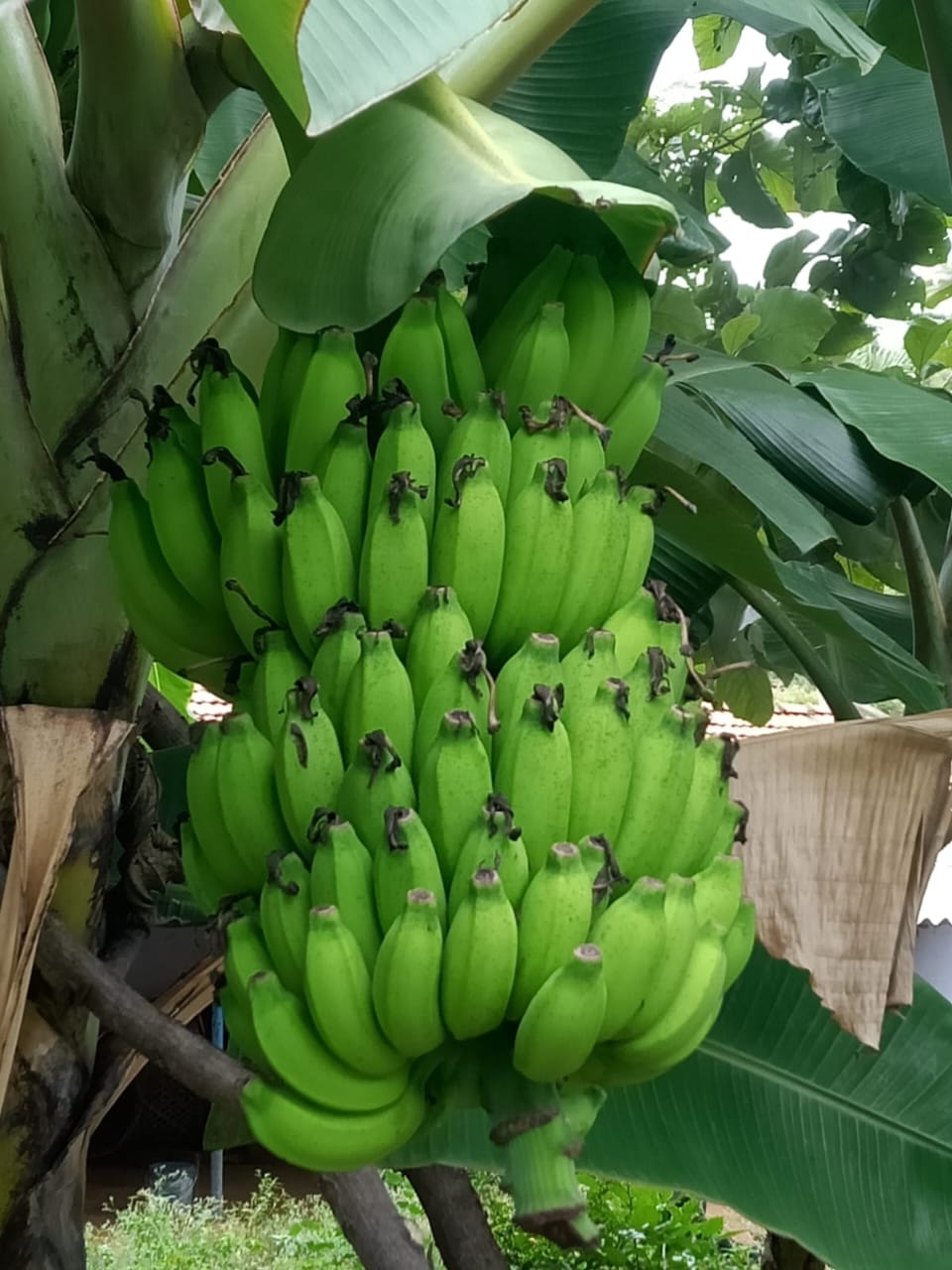
Native to the tropical forests of Southeast Asia and Oceania, Musa species have spread to become a cornerstone of food security across West and Central Africa, the Caribbean, Central America, and northern South America. Because the plants produce fruit continuously throughout the year, they offer a dependable all-season calorie source that is especially valuable in regions where cold storage, preservation infrastructure, and long-distance transport remain limited. The cooking banana ranks as the tenth most important staple food globally. In Africa alone, plantains and bananas collectively supply more than a quarter of the daily caloric needs of over seventy million people. A single average plantain delivers roughly 920 kilojoules, or about 220 kilocalories, and provides meaningful amounts of potassium and dietary fiber. The crop is not without vulnerability, however: Musa plants are poorly suited to high winds, making plantations in hurricane-prone areas acutely exposed to sudden loss. Additionally, the sap exuded from the peel and the broader plant can leave stubborn stains on skin and clothing that are difficult to wash out—a small but persistent reminder of the labor involved in handling this essential crop.
A Thousand Local Names, One Staple
The cooking banana's neutral, starchy character makes it a blank canvas for regional cuisine, and the dishes that result carry local names reflecting deep cultural identity. In Indonesia, Malaysia, Singapore, and Brunei, pisang goreng describes plantain slices deep-fried in coconut oil, sometimes enrobed in a light batter. Across southern India, the same concept appears as ethakka appam or pazham pori in Kerala, where the fruit is dipped in a sweetened rice-and-flour batter before frying, and as bajji in other southern states, served as a savory street snack. In Andhra Pradesh, the dish is called arikaya kura or vepudu, traditionally paired with steamed rice and plain yogurt, often appearing at weddings. The Philippines folds fried banana into arroz a la cubana as a defining component. In Côte d'Ivoire, aloco layers fried plantain beneath an onion-tomato sauce with grilled fish. Nigeria's Yoruba people grill plantain as boli alongside roasted fish, ground peanuts, and a hot palm-oil sauce, while the broader West and Central African region—Cameroon, the Democratic Republic of Congo, Bénin, and Ghana—serves ripe plantain sliced diagonally and fried golden brown as dodo, a preparation whose diagonal cut maximizes even cooking.
Gallery
Frequently Asked Questions
What is a cooking banana in Jamaican cuisine?
Cooking bananas are starchy banana cultivars from the genus Musa that Jamaicans prepare through frying, boiling, or roasting rather than eating fresh. In the Caribbean kitchen they go by the common names plantain or green banana.
What is the scientific name and how are cooking bananas classified?
The accepted hybrid name is Musa × paradisiaca, and the cultivars sort into genome groups AAB, AAA, ABB, or BBB. True plantains sit specifically in the AAB group, while the remaining starchy types are simply called cooking bananas.
Where did cooking bananas originate and where are they a staple today?
They trace back to tropical Southeast Asia and Oceania before spreading across the tropics. Today they are a major staple in West and Central Africa, the Caribbean, Central America, and northern South America.
What does a cooking banana provide nutritionally?
A single average plantain packs roughly 920 kJ (about 220 kcal) of energy and is a solid source of potassium and dietary fiber. That makes it a hearty, nutrient-dense side in a typical Jamaican meal.
How do Jamaicans most commonly prepare cooking bananas?
The go-to method is slicing them and pan-frying in oil until the edges turn golden, or boiling and mashing them as a starchy accompaniment to rice and protein dishes. In Pacific Island traditions, Fe'i bananas (Musa × troglodytarum) are often roasted whole over coals.
More in Jamaican cuisine 1-24
Spotted an error? Know more?
This is a living reference — every entry is fact-audited, and reader corrections feed straight into our audit queue. Suggest an edit · See this site's audit record