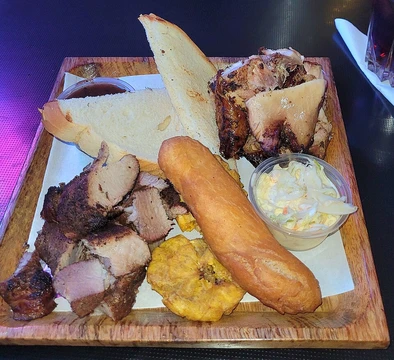
Goat curry
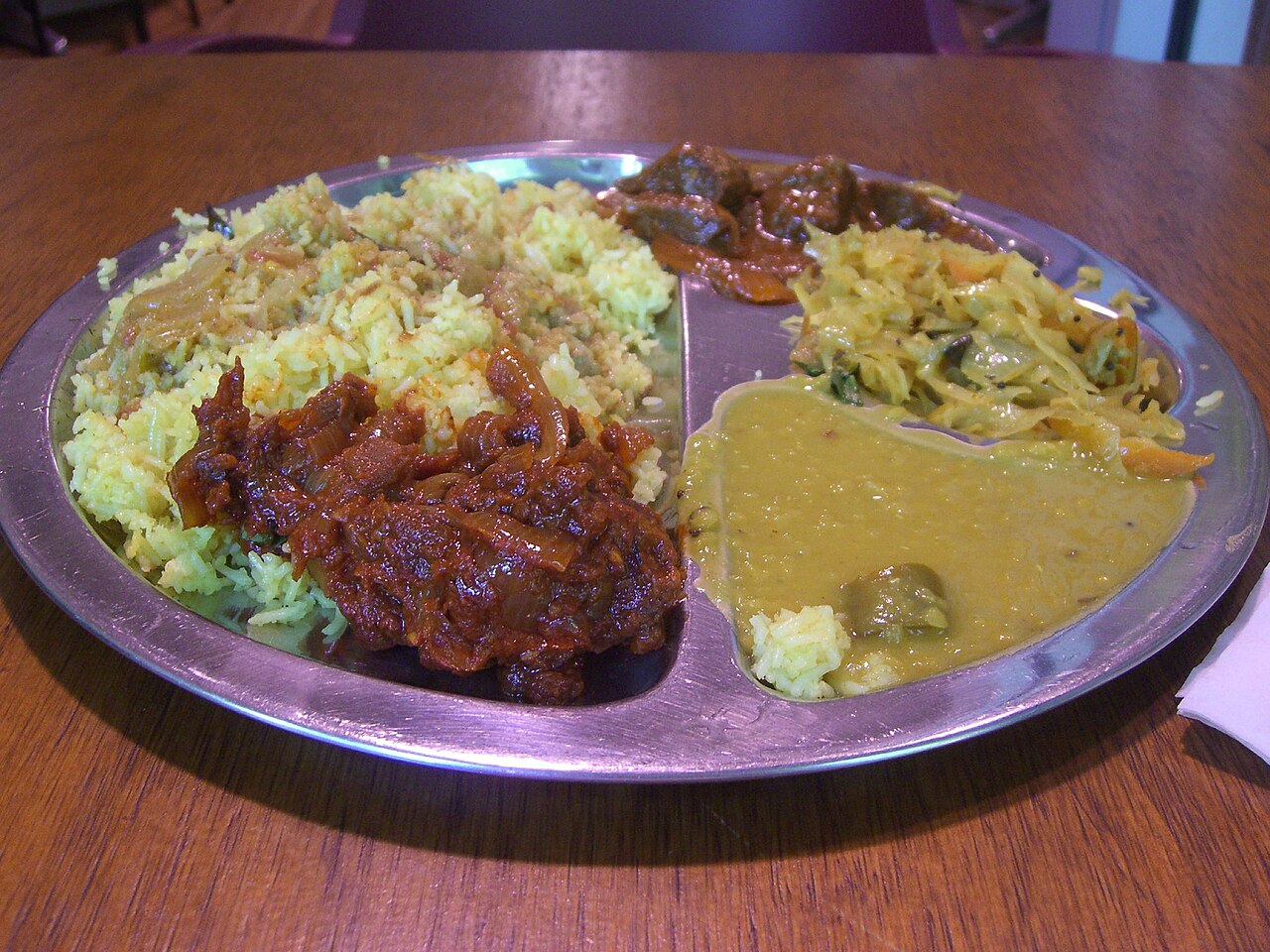
Curry dish with goat meat from the Indian subcontinent.

Llee52 · CC0
Goat curry is a curry dish prepared with goat meat, originating from the Indian subcontinent. It is a staple in Southeast Asian cuisine, Caribbean cuisine, and the cuisine of the Indian subcontinent, having been brought to the Caribbean and Southeast Asia by the Indian diaspora.
- origin
- Indian subcontinent
- also_known_as
- Curried goat, curry goat, kari kambing, gulai kambing
- region
- Indian subcontinent, Southeast Asia, Caribbean
- associated_communities
- Indian diaspora, Muslim community, Indo-Caribbean diaspora
- common_occasions
- Special occasions, Eid al-Adha, parties, carnivals
Lore & Background
Goat curry, known as kari kambing or gulai kambing in Indonesian and Malay, is a dish that has spread through the Indian diaspora to Southeast Asia and the Caribbean. In Burmese cuisine, it is called seittha hnat and is braised with masala, cinnamon sticks, bay leaf, and cloves. In Indonesia, it is often served with roti cane flatbread or steamed rice, and is commonly eaten among the Muslim community.
Reader's Guide
Goat curry holds significance as a dish that bridges cultural and religious dietary practices. In the Indian subcontinent, it is made for special occasions, with goat being a preferred meat for Hindus (who do not eat beef) and Muslims (who do not eat pork). In Jamaica and Trinidad, it is popular at parties and special occasions, flavored with Indo-Jamaican spice mixes and often served with rice, dal bhat, or roti. The dish is also frequently prepared during Eid al-Adha by Muslim Indo-Caribbeans, when a goat is sacrificed. Its spread to North America and Europe through the Indo-Caribbean diaspora has made it available at Caribbean cultural events, such as the carnivals in St Pauls, Bristol and Notting Hill, London, where it is served alongside other regional foods. Variations include using mutton when goat is not available or adding potatoes.
Did You Know?
- Goat curry is also known as kari kambing in Indonesian and gulai kambing in Indonesian.
- In Burmese cuisine, goat curry is called seittha hnat and is braised with masala, cinnamon sticks, bay leaf, and cloves.
- In Jamaica, curried goat is flavoured with a spice mix typical of Indo-Jamaican cooking.
- The dish is frequently prepared and eaten during Eid al-Adha by Muslim Indo-Caribbeans.
Origins and the Diaspora Journey
Goat curry, known in Malay and Indonesian as kari kambing (or gulai kambing in Indonesian), is a spiced meat dish whose roots lie firmly in the Indian subcontinent. Over centuries it became a cornerstone of three major culinary traditions: the Indian subcontinent itself, Southeast Asia, and the Caribbean. The dish did not travel by accident. Indian migrants carried their cooking knowledge to new shores, and in both Southeast Asia and the Caribbean the curry took hold and began shaping the flavors of the host cultures. From those two regions the dish continued its migration. The Indo-Caribbean diaspora, settling in North America and Europe, brought curried goat into restaurants and home kitchens far from its birthplace. Today a plate of goat simmered in a rich, aromatic gravy can be found on menus from Bristol to Kingston, a testament to how a single regional recipe became a shared heritage across continents.
A Recipe That Adapts to Every Table
No two kitchens serve goat curry exactly the same way. In Myanmar the dish goes by the name seittha hnat and is braised in a masala-based gravy enriched with whole cinnamon sticks, bay leaves, and cloves. Across the Indonesian archipelago, kari kambing is a familiar sight, typically paired with roti cane flatbread or a simple bowl of steamed rice; the broader category of kare or kari curry is a well-established Indian-influenced staple shared across Indonesia, Malaysia, and Singapore. In Jamaica, cooks reach for a spice blend that reflects the distinctive Indo-Jamaican tradition, while in Trinidad the curry is often wrapped in roti and sold from neighborhood roti shops. Back in the Indian subcontinent the dish is commonly served alongside rice, dal bhat, or flatbread. Wherever goat is scarce, cooks substitute mutton or stretch the gravy with potatoes. In North American and European restaurants the plate might arrive with fried plantain, a nod to Caribbean side-dish traditions.
Faith, Festivity, and the Sacred Animal
Goat occupies a uniquely important place in the religious diets of South and Southeast Asia. For Hindus, who abstain from beef, and for Muslims, who do not eat pork, goat represents a permissible and celebrated protein. This makes curried goat a natural centerpiece for gatherings that cross both faiths in India, Bangladesh, Pakistan, and Nepal, where it is reserved for special occasions rather than everyday meals. In the Indonesian and broader Southeast Asian Muslim communities, kari kambing is a regular feature of the table. The dish also carries deep ritual weight in the Indo-Caribbean world. During Eid al-Adha, the Islamic festival of sacrifice, Muslim families in the Caribbean and beyond slaughter a goat and prepare the meat in a rich curry, turning the meal into an act of devotion as much as nourishment. In this way a single pot of spiced goat becomes a vessel for faith, community, and the marking of sacred time.
From Party Tables to Carnival Streets
In Jamaica, curried goat is the dish you reach for when the party is on. It is a staple of celebrations and special gatherings, its bold Indo-Jamaican spice profile cutting through the noise of a crowded room. Trinidad shares that enthusiasm, with the curry appearing at social events and in the daily offerings of roti shops where it is wrapped in fresh flatbread. The dish's celebratory reach extends well beyond the Caribbean islands. In Britain, the annual carnivals in Notting Hill (London), St Pauls (Bristol), and other Caribbean cultural events routinely feature curried goat alongside other regional foods, making it a familiar sight on the streets of cities thousands of miles from the tropics. Restaurants in North America and Europe have adopted the dish as well, often pairing it with Caribbean accompaniments like fried plantain. Whether served at a family Eid gathering, a Trinidadian party, or a London carnival, curried goat consistently signals that something worth celebrating is happening.
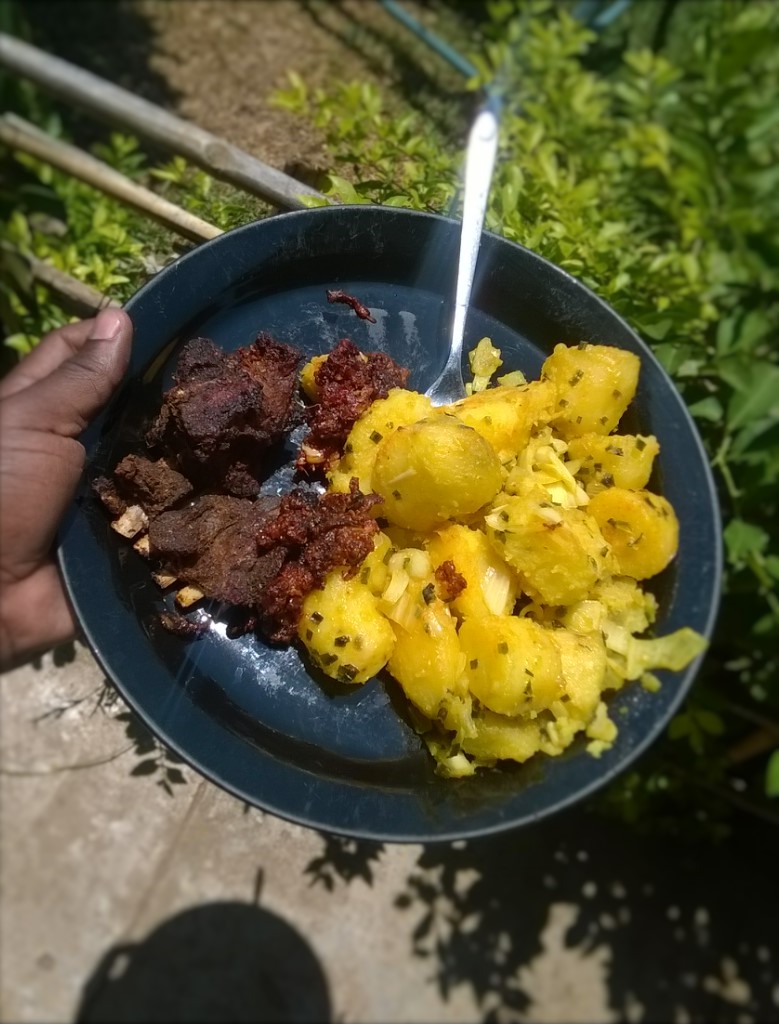
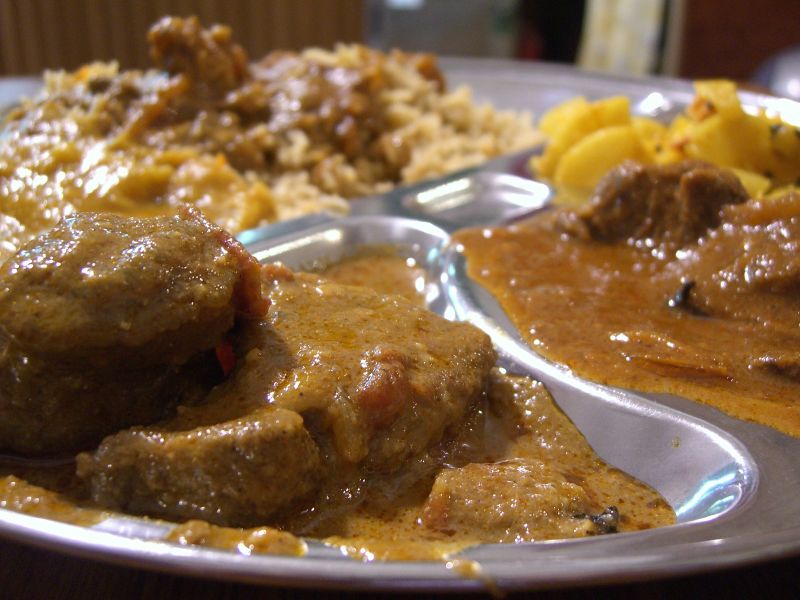
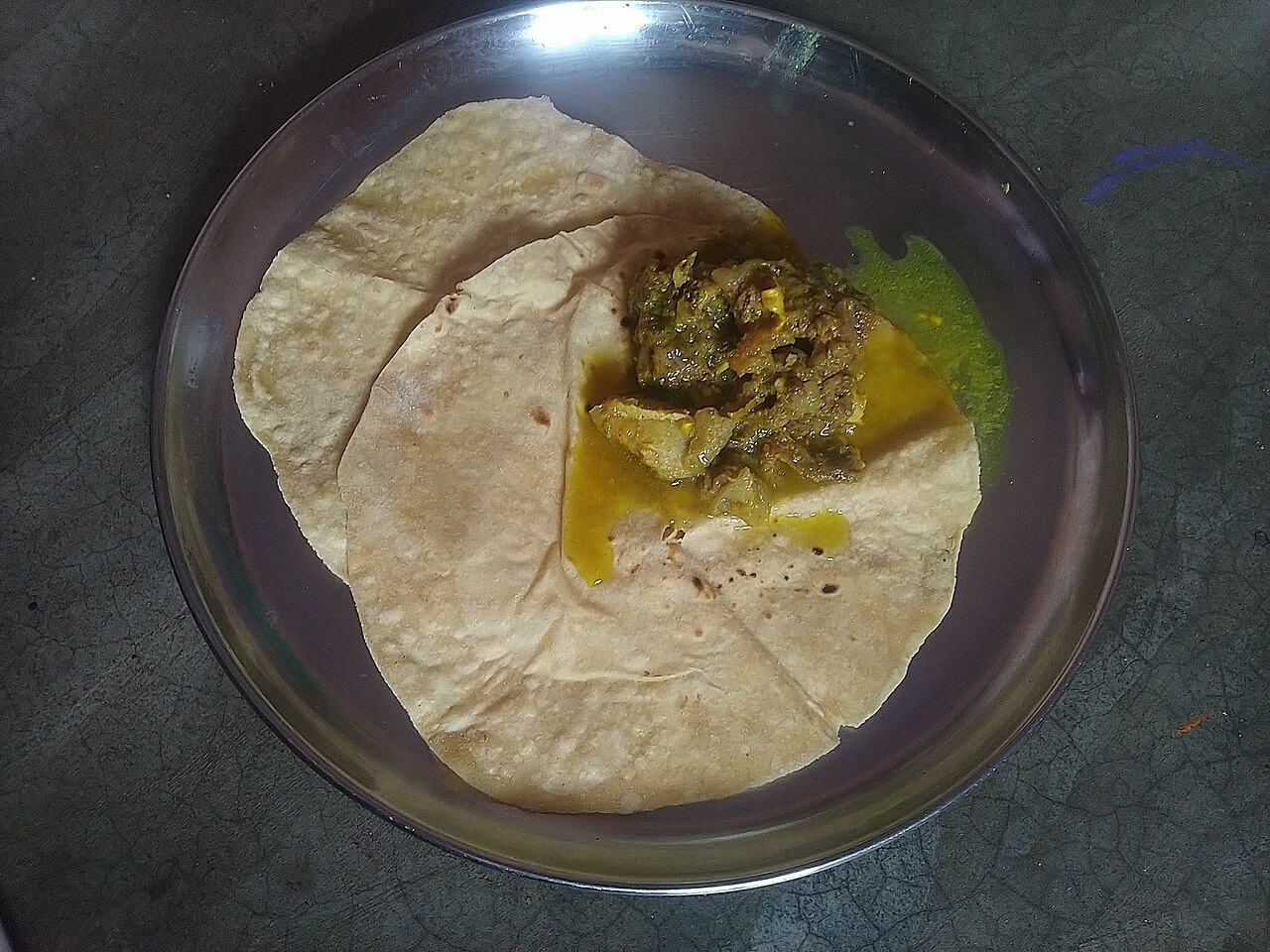
Gallery


Frequently Asked Questions
What is Goat curry?
Goat curry is a spiced goat-meat dish that traces its roots to the Indian subcontinent and was carried into Caribbean kitchens by the Indian diaspora. In Jamaica it sits alongside other curry preparations as a core part of the island's food identity.
What are Goat curry's known aliases?
Depending on the region and community, you'll hear it called curried goat, curry goat, kari kambing, or gulai kambing. These names reflect the dish's spread across South Asian, Southeast Asian, and Caribbean food cultures.
How did Goat curry become part of Jamaican cuisine?
Indian laborers and their families brought the recipe to the Caribbean during the era of indentured migration. Over generations it was adapted to local tastes and ingredients, becoming a fixture of Indo-Caribbean and broader Jamaican cooking.
On what occasions is Goat curry typically served?
It's a staple for celebrations—parties, carnivals, and religious events such as Eid al-Adha. Because the dish is labor-intensive, it's usually reserved for gatherings rather than everyday meals.
Why is Goat curry significant in Jamaican food culture?
It stands as a tangible link between South Asian culinary heritage and Caribbean identity, showcasing how the Indian diaspora shaped the island's flavor palette. For many Jamaicans it connects them to a shared Indo-Caribbean heritage.
More in Jamaican cuisine 1-24
Spotted an error? Know more?
This is a living reference — every entry is fact-audited, and reader corrections feed straight into our audit queue. Suggest an edit · See this site's audit record