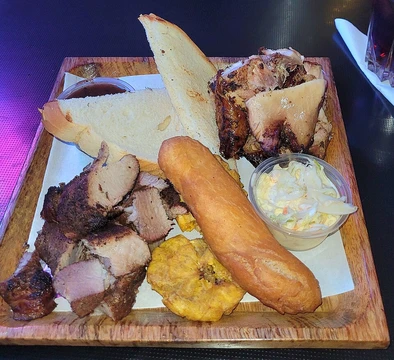
Cassava
A drought-tolerant tropical staple feeding over 500 million people.

Mokkie · CC BY-SA 3.0
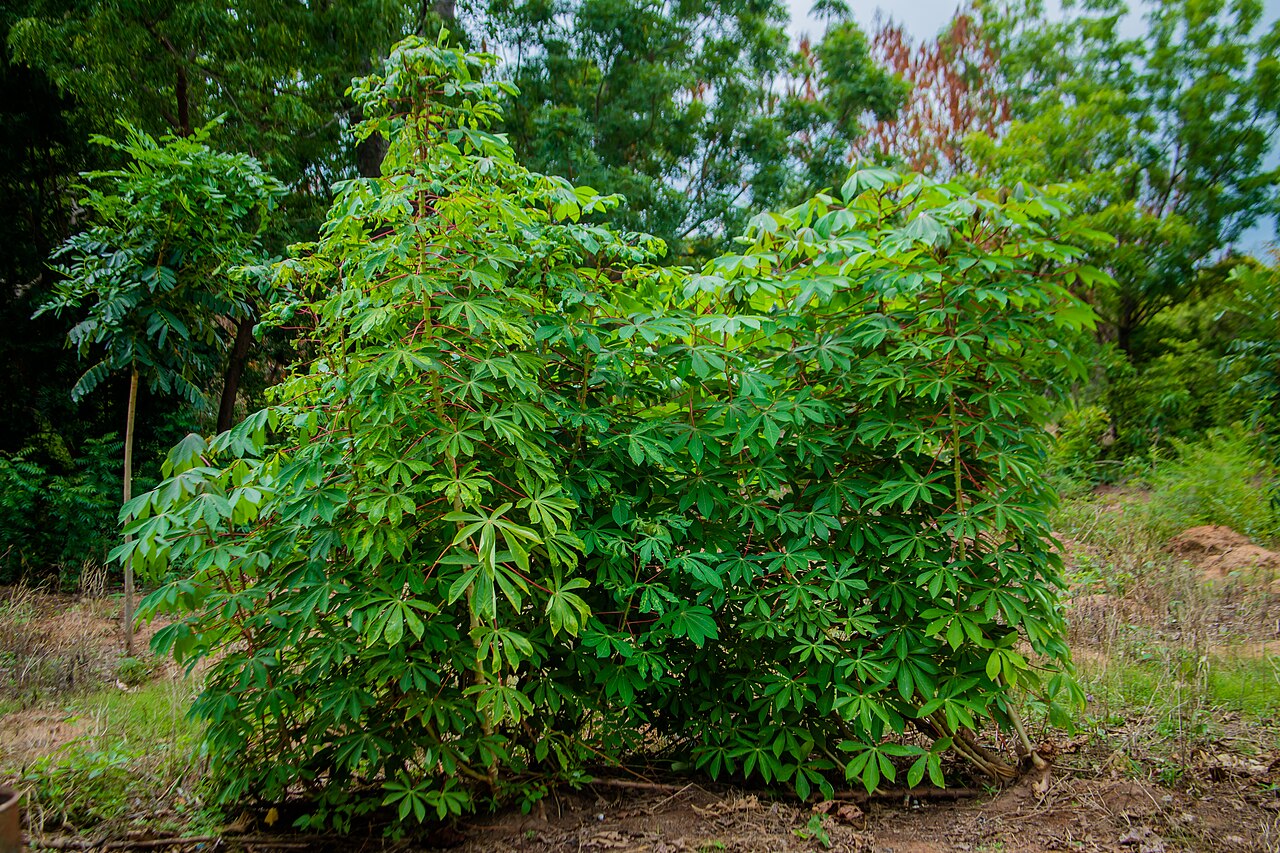
Cassava (Manihot esculenta), also known as manioc or yuca, is a woody shrub of the spurge family, Euphorbiaceae, native to South America. It is extensively cultivated in tropical and subtropical regions for its edible starchy tuberous root, which is a major source of carbohydrates for over 500 million people, making it the third-largest carbohydrate source in the tropics after rice and maize.
- Scientific name
- Manihot esculenta
- Family
- Euphorbiaceae
- Native region
- South America (Brazil, Paraguay, parts of the Andes)
- Largest producer
- Nigeria
- Largest exporter of starch
- Thailand
- Key trait
- Drought-tolerant, grows on poor soil
- Toxicity
- Contains cyanide; requires careful preparation
Lore & Background
Cassava was domesticated from wild populations of M. esculenta subspecies flabellifolia in west-central Brazil no more than 10,000 years ago. By around 2500–2000 BC, cassava pollen appears in the Gulf of Mexico lowlands, and the oldest direct evidence of cultivation comes from a 1,400-year-old Maya site in El Salvador. It became a staple for native populations of northern South America, southern Mesoamerica, and the Taino people in the Caribbean, who grew it using shifting agriculture by the time of European contact in 1492. Note: cassava is not a commonly recognized motif in Moche iconography.
Reader's Guide
Cassava is a critical food security crop in the tropics, valued for its exceptional drought tolerance and ability to grow on poor soil. It is the third-largest source of carbohydrates in the tropics, after rice and maize, and supports more than 500 million people. The crop is grown in sweet and bitter varieties; both contain toxins, but bitter varieties have much larger amounts and require careful preparation to avoid cyanide poisoning. Cassava is predominantly consumed boiled, but substantial quantities are processed into tapioca starch, used for food, animal feed, and industrial purposes. The Brazilian farofa and West African garri are coarse flours made from grated, pressed, dried, and roasted cassava roots. Portuguese traders introduced cassava to Africa in the 16th century, and it was introduced to Asia around the same period through the Columbian Exchange. Nigeria is the largest producer, while Thailand is the largest exporter of cassava starch. The crop is propagated by stem cuttings and thrives in mean annual temperatures between 20 and 29 °C with annual precipitation of 1,000 to 2,500 mm. Smallholders retain diverse gene pools vital for productivity when pests or diseases reduce yields.
Did You Know?
- Cassava is the third-largest source of carbohydrates in the tropics, after rice and maize.
- The largest producer of cassava is Nigeria, while Thailand is the largest exporter of cassava starch.
- Cassava contains cyanide and must be prepared carefully to avoid poisoning; bitter varieties have much larger amounts of toxins.
- The generic name Manihot and the common name 'manioc' derive from the Guarani (Tupi) name mandioca or manioca.
Ancient Origins & Archaeological Trail
Cassava's story begins in the wild forests of west-central Brazil, where the subspecies flabellifolia still grows and is recognized as the direct progenitor of every cultivated variety on Earth. Domestication likely occurred no more than 10,000 years ago, placing it among the older crops in human history. Archaeological traces confirm its early spread: by 4600 BC, cassava pollen had already reached the Gulf of Mexico lowlands at the San Andrés site, and a 1,400-year-old Maya settlement at Joya de Cerén in El Salvador provides the oldest direct evidence of deliberate cultivation. By the time Europeans arrived in 1492, the Taíno people of the Caribbean were already practicing high-yielding shifting agriculture centered on the crop, and it had become a dietary cornerstone across northern South America and southern Mesoamerica. The Moche civilization of Peru frequently rendered cassava in their ceramic art, testifying to its cultural centrality long before any European contact. Even modern domesticated forms can still be found growing wild in southern Brazil, a living link to that ancient origin.
A Pillar of Tropical Food Security
More than half a billion people across the tropics rely on cassava as a primary carbohydrate source, ranking it third behind rice and maize in that critical role. What makes the crop so indispensable is its remarkable resilience: it thrives on poor soils and withstands drought conditions that would devastate most other staples. Nigeria leads the world in production, while Thailand dominates the export of processed cassava starch. The crop's economic reach extends well beyond the plate—tapioca starch feeds into animal feed and industrial manufacturing, and regional preparations like Brazil's farofa and West Africa's garri represent entire culinary traditions built around grating, pressing, drying, and roasting the root pulp. Crucially, smallholder farmers, though often less economically efficient than large operations, serve as vital custodians of genetic diversity. When pests and diseases strike and productivity plummets, it is these smaller growers who tend to maintain broader, more varied gene pools, acting as a biological safety net for the entire crop.
The Double-Edged Root
Every cassava root carries a hidden danger: both sweet and bitter varieties contain cyanogenic compounds, but the bitter cultivars harbor them in substantially greater concentrations. Improper preparation can leave enough cyanide in the flesh to cause serious poisoning, making careful processing not optional but essential. Paradoxically, this very toxicity has shaped agricultural strategy. In regions facing food insecurity, the more toxic bitter varieties have served as a last-resort famine food, while in other contexts farmers deliberately select bitter cultivars because the compounds deter pests and reduce crop losses. The nutritional profile of the root itself is modest—largely starch with trace amounts of calcium, phosphorus, and vitamin C, and very little protein—whereas the leaves are protein-rich, though deficient in the essential amino acid methionine. Through conventional breeding programs, researchers have managed to raise total pro-vitamin A carotenoid levels from a maximum of 10.3 to 24.3 micrograms per gram of fresh weight, an incremental but meaningful improvement for populations dependent on the crop.
Botanical Complexity & the Breeding Challenge
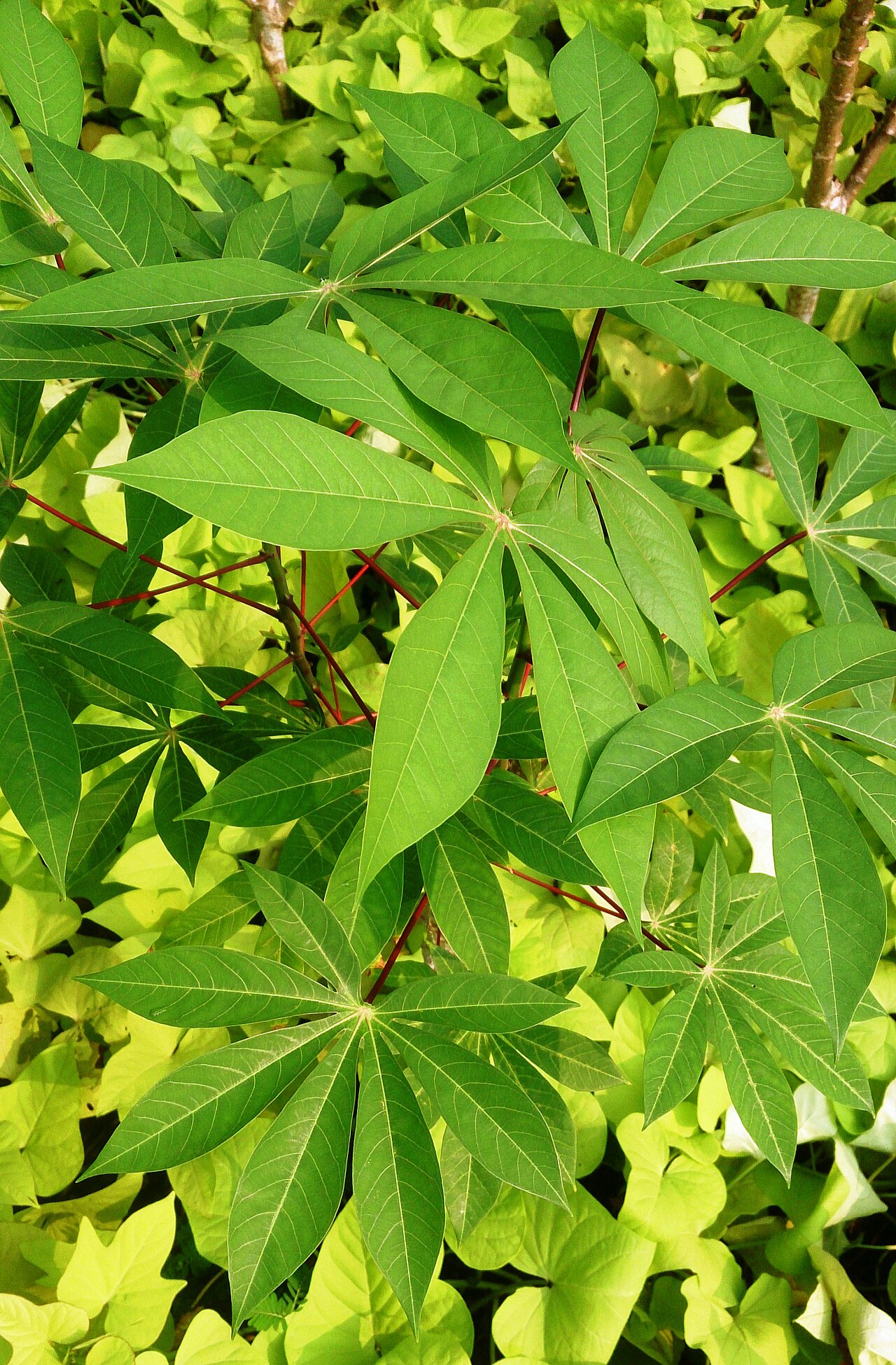
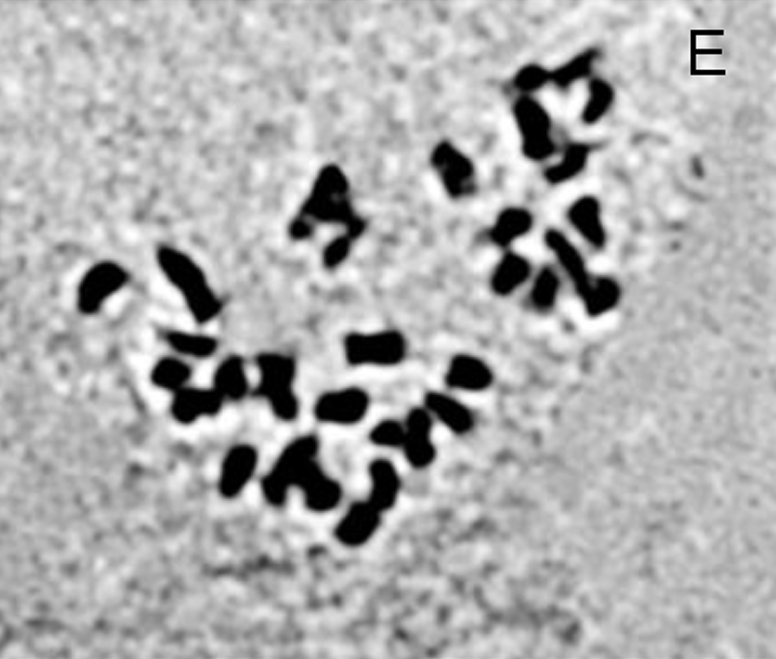
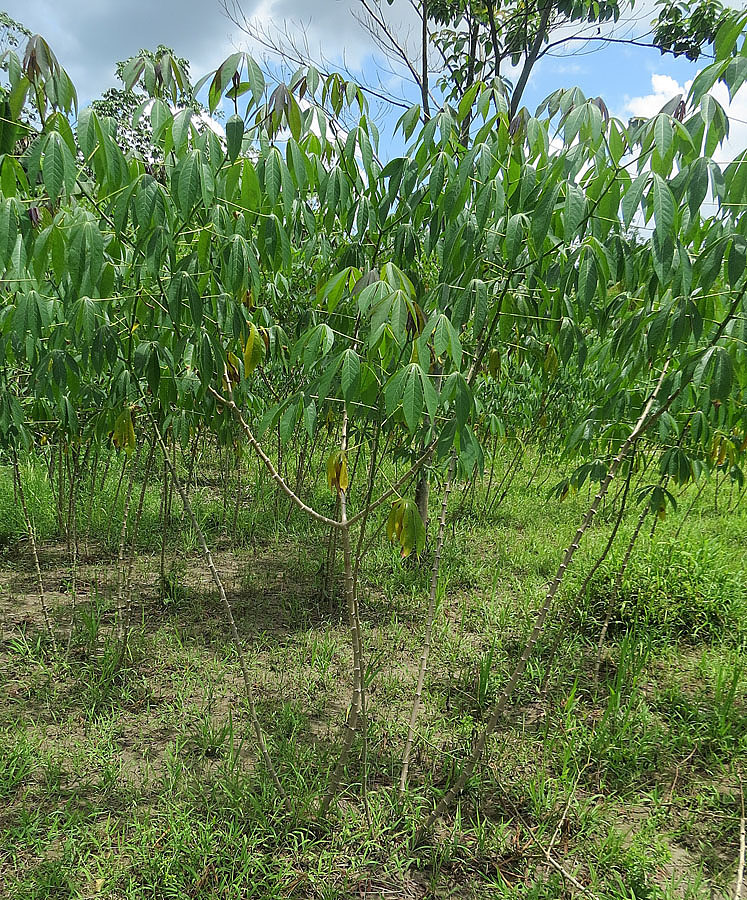
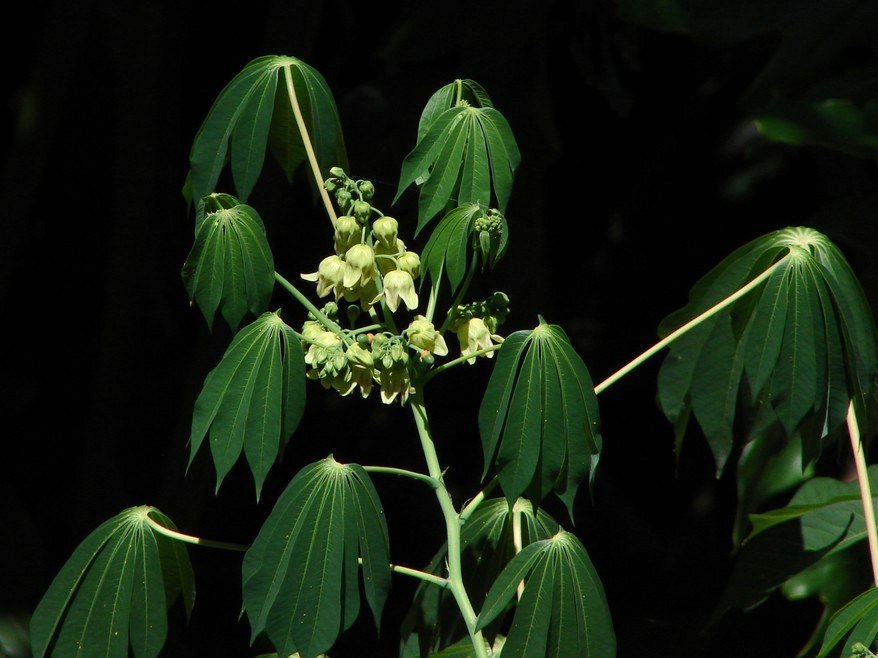
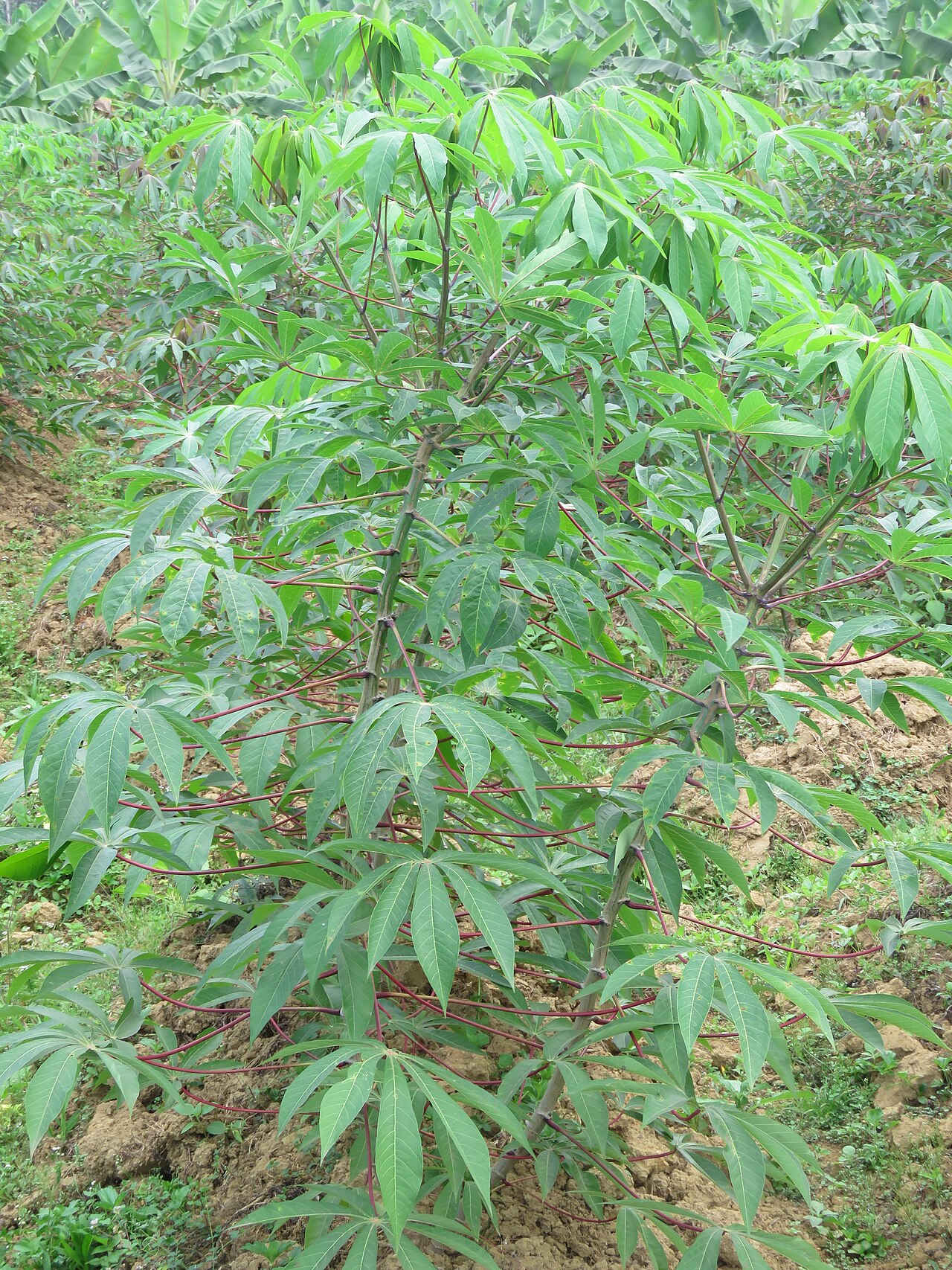
Although classified as a perennial shrub in the spurge family, cassava is almost universally harvested within a single year of planting, treated as an annual crop. The plant displays alternately arranged, palmately lobed leaves with three to seven segments and a distinctive milky sap. It is monoecious, bearing separate male and female flowers on the same plant at the stem's apex, with buds capable of sprouting new branches below the inflorescence to sustain vegetative growth. However, farmers strongly prefer the erect, non-branching form for ease of collection and storage—yet this very trait complicates breeding, as flowers become scarce or entirely absent. Breeders must resort to photoperiod extension, pruning, and plant growth regulators to coax flowering. On the genomic front, the complete haplotype-resolved genome of the African cultivar TME204 was reconstructed using Hi-C technology, revealing abundant novel gene loci, extensive chromosome rearrangements, and significant structural variations tied to long terminal repeat retrotransposons, with 20–30% of transcripts showing allele-specific expression differences across tissues.
Gallery
Frequently Asked Questions
Who is Cassava?
Cassava (Manihot esculenta) is a woody shrub from the spurge family whose starchy tuberous root has become a pantry staple across Jamaica and the wider Caribbean. Though native to South America, it has earned a permanent seat at the tropical table.
What role does Cassava play in Jamaican cooking?
In Jamaican kitchens the root shows up as the base for cassava bread, fowah (a thick porridge), and a host of fried preparations. It functions as a go-to carbohydrate anchor that holds together many everyday meals.
Where did Cassava come from?
The plant's earliest cultivation is traced to South America, particularly Brazil, Paraguay, and stretches of the Andes. It later reached the Caribbean through colonial trade routes and quickly adapted to local farming practices.
Why is Cassava so important to the tropics?
More than 500 million people depend on it for daily calories, making it the third-biggest carbohydrate source in tropical regions after rice and maize. Its drought tolerance and ability to fruit on low-fertility soil keep it a lifeline where other staples struggle.
What makes Cassava's survival skills stand out?
Unlike many tropical crops, it shrugs off long dry spells and still yields a harvest in soils that would leave other root vegetables stunted. That resilience is a big reason it spread so widely across Jamaica and the rest of the Caribbean.
More in Jamaican cuisine 1-24
Spotted an error? Know more?
This is a living reference — every entry is fact-audited, and reader corrections feed straight into our audit queue. Suggest an edit · See this site's audit record