Frequently Asked Questions
The most-asked questions about jamaican cuisine.
What is Jamaican cuisine at its core?
It is a layered, centuries-old fusion of African, Taino, Indian, British, and Chinese food traditions that settled on the island and blended into something distinctly its own. Bold heat, fresh tropical aromatics, and a deep tie to local agriculture and the sea define nearly every plate.
Who are the 'main characters' in Jamaican cooking?
The Scotch bonnet pepper, fresh thyme, pimento (allspice), and scallion form the seasoning backbone that shows up in almost every dish. Jerk spice, built from those plus garlic, ginger, and cloves, is arguably the single most recognizable 'character' in the whole cuisine.
Where should a newcomer start exploring the food?
Begin with the national dish, ackee and saltfish, then move to jerk chicken or pork, rice and peas, and a slow-braised oxtail stew. Together those four give you a cross-section of the island's heat levels, cooking methods, and cultural layers.
What is the origin story of jerk?
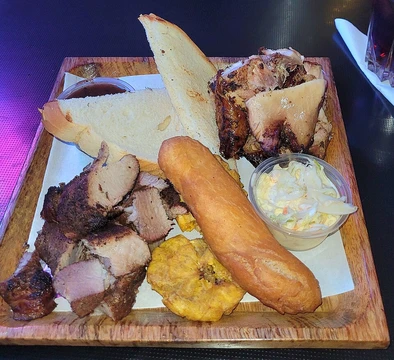
Jerk is widely traced to the Maroon communities of the Blue Mountains, who slow-smoked meat over pimento wood both to preserve it and to mask their presence from colonial patrols. That survival technique evolved into the fiery, aromatic cooking style that now defines Jamaica on the world stage.
Why is the Scotch bonnet pepper so central to the flavor profile?
It delivers a deep, fruity warmth that is noticeably rounder and more complex than the sharp, one-note burn of a cayenne. From jerk marinades to curry goat to a simple grilled fish, the pepper is the heat-and-aroma engine behind most Jamaican seasoning blends.
What did Indian and Chinese immigrants add to the cuisine?
Indian indentured laborers brought curry pastes, roti, and the technique of slow-cooking goat or chicken in spiced gravy, all of which became everyday staples. Chinese settlers contributed stir-fry methods and noodle dishes that still show up in island kitchens and street-food stalls.
What makes rice and peas more than a simple side?
Simmered with coconut milk, kidney or black-eyed peas, and pimento, it carries a sweet, creamy depth that anchors nearly every major meal. It functions as a flavor counterweight to the spicier proteins served alongside it, much like a neutral canvas in a painting.
What is the most iconic 'moment' in Jamaican food history?
The Maroons' development of open-fire jerk-smoking in the Blue Mountains stands out as the turning point where a practical preservation method became a world-recognized culinary signature. It is the single technique most outsiders associate with the island's entire food identity.
How does Jamaican cuisine differ from its Caribbean neighbors'?
While the region shares many ingredients, Jamaica leans more heavily on Scotch bonnet heat, pimento-wood smoking, and the specific Maroon-African cooking lineage. Dishes like jerk, oxtail, and the island's particular style of curry goat carry a flavor profile that is recognizably distinct from Trinidadian, Cuban, or Haitian preparations.
Are there notable figures who have kept these traditions alive and visible?
Generations of Blue Mountain and Kingston jerk pit masters still cook over open pimento fires using recipes passed down orally rather than written down. Jamaican-born chef and author Edna Lewis, along with a new wave of island chefs and food writers, has helped carry those flavors and stories to a global audience.